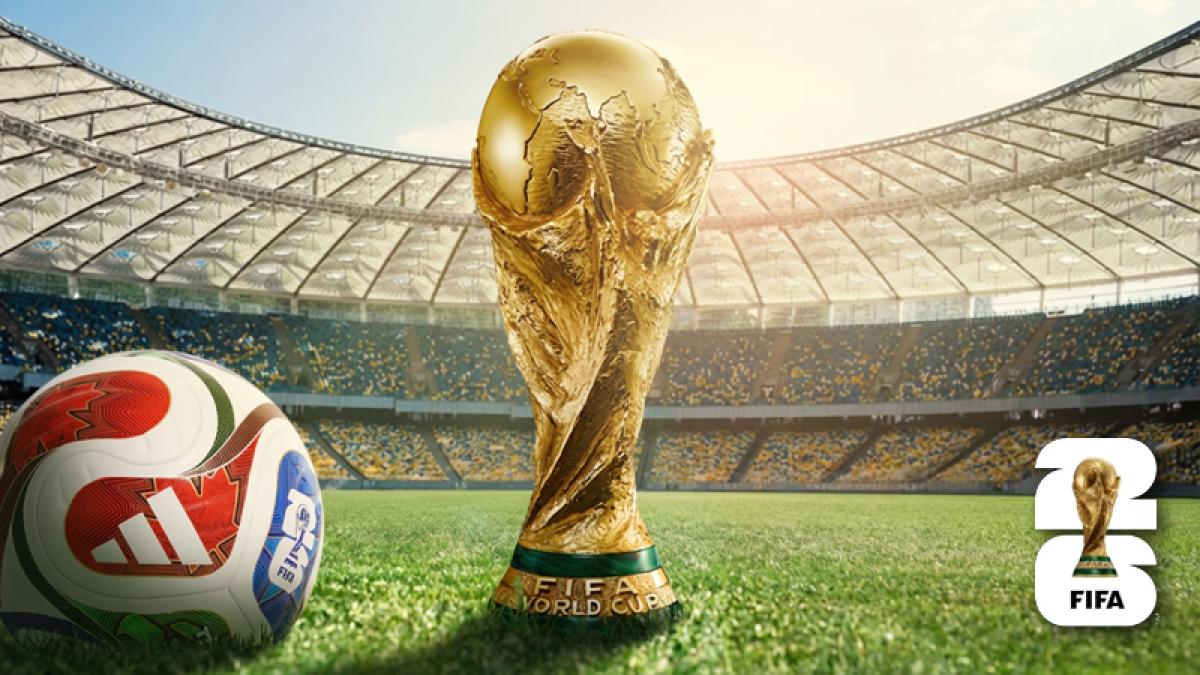
Football is the world’s most popular sport, bringing together billions of fans from every continent. At the heart of this global passion is FIFA, the organization responsible for governing international football and organizing the sport’s biggest competitions. Whether you are a lifelong football fan or just beginning to explore the game, understanding FIFA is essential to appreciating how modern football operates. FIFA has played a significant role in developing football, promoting fair play, supporting national associations, and creating tournaments that unite people across cultures. From the iconic FIFA World Cup to youth competitions and women’s football, FIFA has transformed football into a truly global phenomenon. This guide explains everything you need to know about FIFA, including its history, objectives, tournaments, governance, and influence on world football.
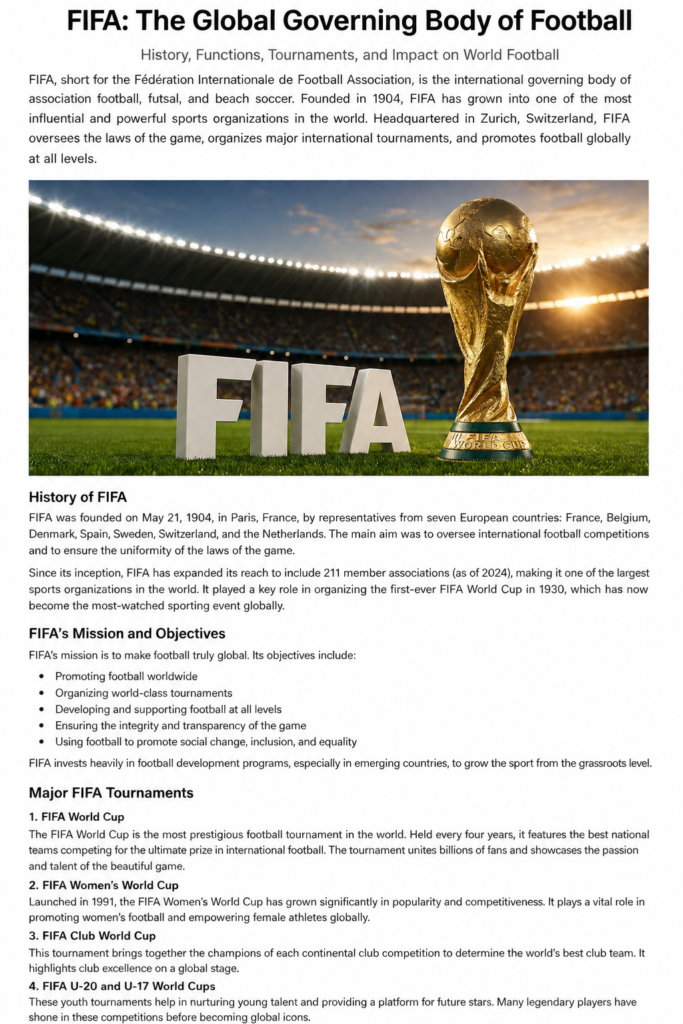
FIFA stands for the Fédération Internationale de Football Association, which translates to the International Federation of Association Football. It was established on May 21, 1904, in Paris, France, by representatives from seven European countries. The founding members aimed to create an international governing body that would standardize the rules of football and organize competitions between national teams. Over the years, FIFA has expanded significantly and now includes more than 200 member associations, making it one of the largest sports organizations in the world. Today, FIFA’s headquarters are located in Zurich, Switzerland, where it coordinates football activities across every continent.
The primary mission of FIFA is to develop football globally while ensuring the sport remains fair, inclusive, and accessible to everyone. FIFA works closely with continental confederations and national football associations to improve football infrastructure, support youth development, promote women’s football, and maintain the integrity of the game. Through funding programs, coaching education, referee development, and grassroots initiatives, FIFA helps countries build stronger football systems. Its vision is to make football available to every community regardless of economic or geographical limitations.
One of FIFA’s greatest responsibilities is organizing international football tournaments. The most famous competition is the FIFA World Cup, which is held every four years and is considered the biggest sporting event in the world. Nations compete through qualification rounds to earn a place in the tournament, where the world’s best players represent their countries. The FIFA World Cup attracts billions of television viewers and millions of visitors, making it one of the most-watched events globally. Legendary footballers such as Pelé, Diego Maradona, Lionel Messi, Cristiano Ronaldo, and Kylian Mbappé have all contributed to the tournament’s remarkable history.
In addition to the men’s FIFA World Cup, FIFA organizes several prestigious competitions that promote football at every level. The FIFA Women’s World Cup has experienced tremendous growth and now stands among the most significant sporting events for women worldwide. FIFA also hosts the FIFA Club World Cup, where champion clubs from each continent compete for international glory. Youth competitions such as the FIFA U-20 World Cup and FIFA U-17 World Cup provide opportunities for emerging talents to showcase their abilities before becoming global stars. FIFA also oversees futsal and beach soccer competitions, further expanding the reach of football.
FIFA is responsible for maintaining the official Laws of the Game alongside the International Football Association Board (IFAB). While IFAB determines the rules, FIFA ensures they are implemented consistently across international competitions. The organization also invests heavily in technology to improve fairness in football. Innovations such as the Video Assistant Referee (VAR) system, goal-line technology, and advanced player tracking have significantly improved officiating accuracy and enhanced the quality of the game.
The impact of FIFA extends beyond tournaments. Football has become a powerful tool for promoting education, equality, peace, and community development. FIFA regularly launches campaigns against racism, discrimination, and violence while encouraging respect, diversity, and inclusion. Development programs funded by FIFA have helped build football fields, training centers, and educational facilities in developing countries. These initiatives create opportunities for young athletes and strengthen communities through sport.
Financially, FIFA generates billions of dollars through broadcasting rights, sponsorships, licensing agreements, and commercial partnerships. Much of this revenue is reinvested into football development projects across the world. FIFA’s financial support enables smaller football associations to improve facilities, organize competitions, and develop local talent. Although FIFA has faced criticism and governance challenges over the years, it has introduced reforms to improve transparency, accountability, and organizational management.
Technology has also transformed FIFA’s operations in recent years. Digital platforms, mobile applications, social media, and artificial intelligence have improved fan engagement and tournament management. Fans can now follow live scores, player statistics, match highlights, ticket information, and official updates through FIFA’s digital ecosystem. These technological advancements continue to strengthen the connection between football and its global audience.
Women’s football has become one of FIFA’s highest priorities. The organization continues investing in professional leagues, coaching education, youth academies, and international competitions for female players. The rapid growth of the FIFA Women’s World Cup demonstrates the increasing popularity and commercial success of women’s football. FIFA aims to create equal opportunities for male and female athletes while encouraging more girls to participate in the sport worldwide.
Youth development remains another essential pillar of FIFA’s long-term strategy. Grassroots football programs identify young talent, improve coaching standards, and encourage healthy lifestyles among children. Many of today’s greatest football stars began their journey in FIFA-supported youth competitions before becoming international icons. By investing in the next generation, FIFA ensures the future growth and sustainability of football across every continent.
Environmental sustainability has also become an important focus for FIFA. Recent tournaments have included initiatives to reduce carbon emissions, improve waste management, promote renewable energy, and encourage environmentally friendly stadium construction. FIFA continues working with host nations to make international competitions more sustainable while protecting natural resources for future generations.
Despite facing controversies throughout its history, FIFA remains the most influential organization in world football. It continues adapting to changes in technology, society, and global sports while maintaining its mission of developing football everywhere. The organization’s ability to unite nations through competition, inspire young athletes, and promote international cooperation demonstrates why football is often called the world’s game.
In conclusion, FIFA represents far more than an organization that organizes football tournaments. It serves as the global leader responsible for developing the sport, promoting fair competition, supporting national associations, investing in youth and women’s football, and bringing billions of people together through their shared passion for the beautiful game. As football continues to evolve, FIFA will remain at the center of its growth, innovation, and worldwide influence, ensuring that future generations continue to enjoy the excitement, unity, and inspiration that football provides.
SEO Title
What Is FIFA? Complete Guide to FIFA History, World Cup, Mission & Global Football
Focus Keyword
What Is FIFA
Meta Description
Learn what FIFA is, its history, mission, FIFA World Cup, major tournaments, governance, and global impact on football. A complete beginner-friendly FIFA guide with SEO-optimized content.
ab fifa ki img bnou
We’re so sorry, but the image we created may violate our content policies. If you think we got it wrong, please retry or edit your prompt.