
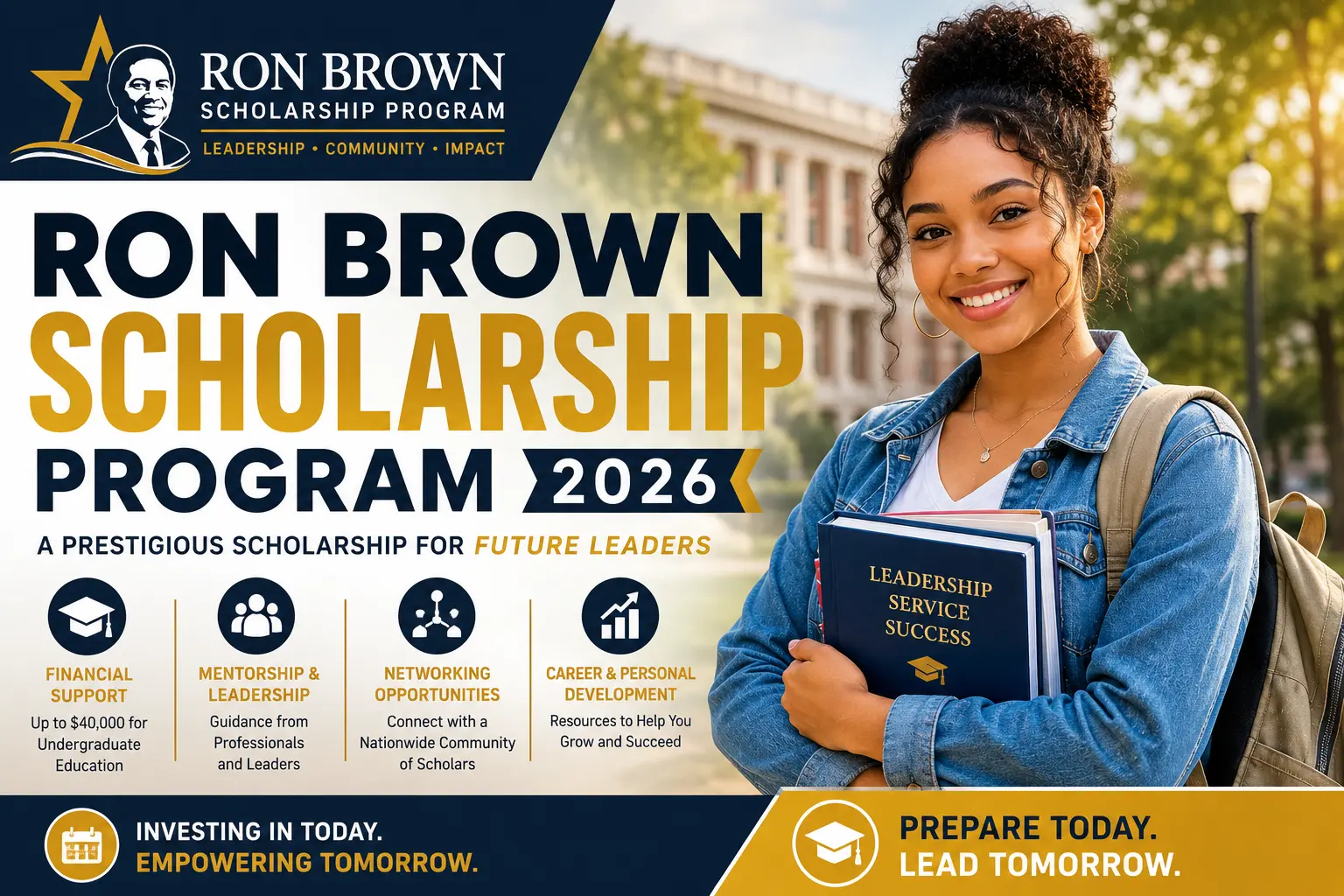
Pursuing higher education can be financially challenging, especially for students aiming to attend competitive colleges and universities. Fortunately, prestigious scholarships like the Ron Brown Scholarship Program help talented students achieve their academic and career goals without the burden of overwhelming educational expenses.
If you’re a high school senior planning to apply for college in 2026, understanding how the Ron Brown Scholarship Program works could significantly improve your chances of receiving financial support. Beyond funding, the programme offers leadership development, mentoring, networking opportunities, and lifelong professional support. ReadMore
This comprehensive guide explains everything you need to know about the Ron Brown Scholarship Program, including eligibility requirements, scholarship benefits, the application process, selection criteria, deadlines, expert tips, and frequently asked questions.
Table of Contents
- What is the Ron Brown Scholarship Program?
- History and Mission
- Scholarship Benefits
- Eligibility Requirements
- Who Should Apply?
- Selection Criteria
- Application Process
- Required Documents
- Application Timeline
- Tips to Improve Your Chances
- Common Mistakes to Avoid
- FAQs
What Is the Ron Brown Scholarship Program?
The Ron Brown Scholarship Program is one of the most respected merit-based scholarship programmes in the United States. It was established to honour the legacy of Ronald H. Brown, the first African American to serve as the U.S. Secretary of Commerce.
The scholarship recognises academically talented, community-minded students who demonstrate exceptional leadership potential, integrity, public service, and financial need.
Unlike many scholarships that provide only a one-time award, the Ron Brown Scholarship supports recipients throughout their undergraduate education, helping them succeed both academically and professionally.
The programme focuses on developing future leaders who are committed to making meaningful contributions to their communities and professions.
History of the Ron Brown Scholarship Program
The programme was created in 1996 following the tragic death of Ronald H. Brown.
Ron Brown was widely respected for his commitment to public service, education, economic development, and equal opportunities for underrepresented communities.
His vision inspired the creation of a scholarship that not only helps students pay for college but also encourages them to become ethical leaders capable of creating positive social change.
Since its establishment, the scholarship has supported hundreds of outstanding students who have gone on to become physicians, engineers, entrepreneurs, educators, lawyers, scientists, public servants, and business leaders.
Today, the Ron Brown Scholarship remains one of the nation’s most competitive and prestigious undergraduate scholarship programmes.
Why Is the Ron Brown Scholarship Program So Prestigious?
Thousands of scholarships are available each year, but the Ron Brown Scholarship Program stands out because it looks beyond grades alone.
The selection committee evaluates applicants using a holistic approach that considers academic excellence, leadership, service, character, and future potential.
Recipients become part of a strong alumni network that provides ongoing mentorship and professional development opportunities long after graduation.
Key reasons the scholarship is highly respected include:
- Merit-based selection process
- Significant financial support
- Leadership development opportunities
- Career mentoring
- Internship connections
- Alumni networking
- National recognition
- Long-term professional guidance
Winning this scholarship is often viewed as a mark of excellence by colleges, graduate schools, and employers.
Scholarship Benefits
One of the biggest reasons students apply for the Ron Brown Scholarship Program is its comprehensive support.
Recipients receive far more than financial assistance.
Financial Award
Selected scholars receive up to $40,000 toward their undergraduate education, typically distributed over four years, provided programme requirements continue to be met.
The funding can help cover educational expenses such as:
- Tuition
- Mandatory university fees
- Books
- Educational supplies
- Room and board
- Other approved college costs
Leadership Development
Ron Brown Scholars participate in leadership programmes designed to help students strengthen important life and career skills.
These opportunities often include:
- Leadership conferences
- Professional workshops
- Community service initiatives
- Career development events
- Personal growth seminars
Mentorship
Each scholar gains access to experienced professionals who provide guidance throughout college and beyond.
Mentors help students with:
- Career planning
- Graduate school preparation
- Internship advice
- Professional networking
- Personal development
Alumni Network
One of the programme’s greatest strengths is its active alumni community.
Graduates remain connected through networking events, mentorship opportunities, and career collaborations.
This lifelong network often opens doors to internships, research opportunities, fellowships, and employment.
Professional Development
Throughout college, scholars benefit from specialised programmes that prepare them for successful careers.
Support may include:
- Resume reviews
- Interview preparation
- Leadership coaching
- Internship recommendations
- Career exploration
- Networking sessions
Who Can Apply?
The Ron Brown Scholarship Program is intended for motivated students who demonstrate academic excellence, leadership, and a commitment to serving their communities.
Generally, applicants should be:
- High school seniors
- Planning to enrol full-time in an accredited four-year college or university
- Strong academic performers
- Active in extracurricular activities
- Demonstrated leaders
- Involved in community service
- Able to demonstrate financial need
- Committed to making a positive societal impact
Meeting the minimum eligibility requirements does not guarantee selection, as the programme is highly competitive.
Why College Applicants Should Consider This Scholarship
College costs continue to rise, making scholarships increasingly important.
The Ron Brown Scholarship Program offers more than financial support—it provides access to leadership opportunities, mentoring, and a network that can benefit students well beyond graduation.
For applicants who have consistently excelled in academics, shown leadership in school or community activities, and aspire to make a positive difference, this scholarship can be a valuable opportunity to reduce financial barriers while investing in long-term personal and professional growth.
Ron Brown Scholarship Program (2026): Complete Guide for College Applicants
Eligibility Requirements for the Ron Brown Scholarship Program
Before applying, it’s important to understand the eligibility requirements. Meeting these requirements is the first step toward submitting a competitive application.
Although applicants should always review the latest official eligibility criteria before applying, the Ron Brown Scholarship Program is generally intended for students who demonstrate exceptional academic achievement, leadership, and financial need.
1. High School Senior Status
Applicants should generally be graduating high school during the current academic year and planning to begin college shortly after graduation.
The programme is designed for first-year undergraduate students rather than current college students or graduate students.
2. Academic Excellence
Academic performance is one of the most important factors in the selection process.
Successful applicants often have:
- Strong GPAs
- Challenging coursework
- Advanced Placement (AP), IB, or honours classes (when available)
- Consistently high academic performance
- Strong teacher recommendations
The scholarship committee values students who demonstrate intellectual curiosity, discipline, and a commitment to learning. MoreOver
3. Leadership Experience
Leadership is a defining feature of successful applicants.
Leadership doesn’t necessarily mean holding the title of class president. Instead, it reflects your ability to influence, organise, and inspire others.
Examples include:
- Student government
- Debate club
- School captain
- Sports team captain
- Community organiser
- Youth leadership programmes
- Volunteer coordinator
- Club founder
Quality leadership experiences usually matter more than the number of activities listed.
4. Community Service
Community involvement is another major evaluation criterion.
Applicants should demonstrate a genuine commitment to serving others through meaningful volunteer work.
Examples include:
- Food bank volunteering
- Tutoring younger students
- Environmental projects
- Church or faith-based service
- Charity fundraising
- Community clean-up events
- Mentoring programmes
- Local non-profit organisations
Long-term commitment to a cause often carries more weight than participating in many one-time events.
5. Financial Need Ron Brown Scholarship Program.
Financial need is considered as part of the selection process.
Applicants may be asked to provide information about:
- Household income
- Family financial circumstances
- Number of dependents
- Other educational expenses
- Expected college costs
Being able to clearly explain your financial situation can strengthen your application.
6. Character and Integrity
The scholarship committee looks beyond grades and test scores.
Applicants should demonstrate:
- Honesty
- Responsibility
- Respect
- Compassion
- Perseverance
- Ethical decision-making
- Commitment to helping others
Strong recommendation letters often provide evidence of these qualities.
Who Makes an Ideal Candidate?
The strongest applicants typically combine academic excellence with meaningful leadership and service.
An ideal candidate often demonstrates:
- Excellent academic results
- A consistent record of leadership
- Community involvement
- Personal resilience
- Clear career goals
- Strong communication skills
- Financial need
- A commitment to creating positive change
How the Selection Committee Evaluates Applicants
The Ron Brown Scholarship Program uses a holistic review process.
Rather than focusing on a single number, reviewers consider multiple aspects of each application.
Academic Achievement
Reviewers evaluate:
- Coursework rigour
- GPA
- Academic awards
- Class performance
- Intellectual potential
Leadership Potential
Leadership is assessed through:
- School activities
- Community involvement
- Employment experiences
- Volunteer leadership
- Initiative shown in projects
Community Impact
The committee values students who actively improve their communities.
Examples include:
- Launching local initiatives
- Organising volunteer programmes
- Raising awareness about important issues
- Supporting underserved populations
Personal Character
Applicants should demonstrate:
- Integrity
- Resilience
- Determination
- Maturity
- Accountability
Personal essays often provide the strongest evidence of these qualities.
Career Vision
Strong applicants usually have a clear understanding of:
- Their intended field of study
- Long-term career aspirations
- How higher education will help achieve those goals
- How they plan to contribute to society
Step-by-Step Application Process
Applying for the Ron Brown Scholarship Program requires careful preparation.
Following a structured approach can help you submit a strong application.
Step 1: Review Eligibility
Before beginning, confirm that you meet all eligibility requirements.
Read the programme guidelines carefully and make note of important deadlines.
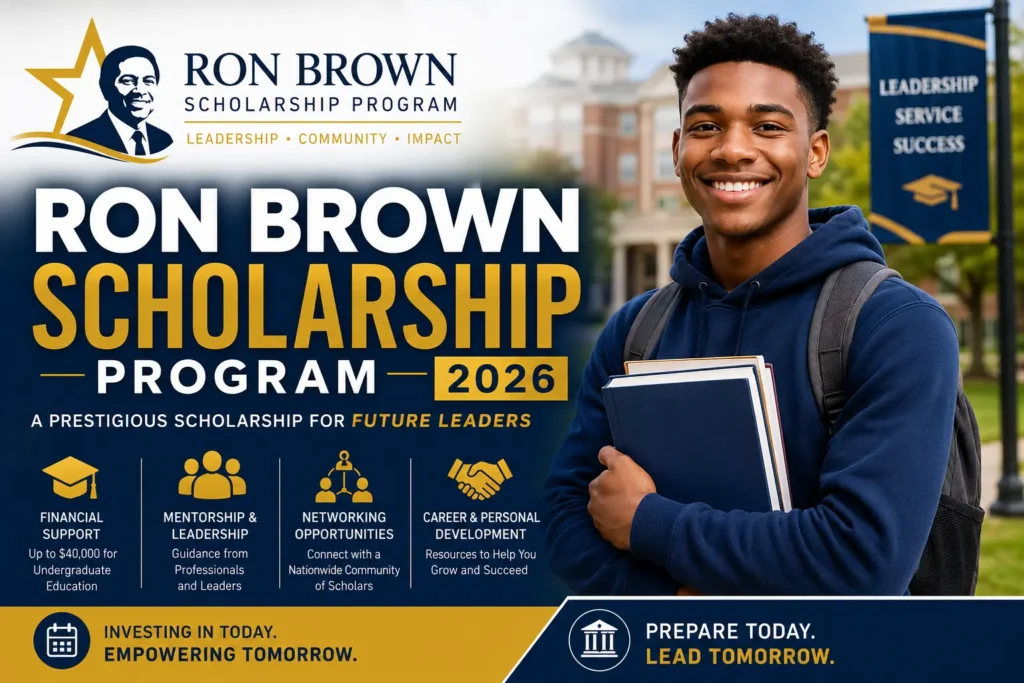
Step 2: Gather Required Documents for Ron Brown Scholarship Program.
Prepare all necessary documents well before the deadline.
These may include:
- High school transcript
- Application form
- Personal essays
- Letters of recommendation
- Academic achievements
- Community service records
- Leadership activities
- Financial information (if requested)
Starting early allows time to correct any missing or incomplete information.
Step 3: Complete the Application Form
Fill out every section carefully.
Double-check:
- Spelling
- Contact information
- Academic history
- Activity descriptions
- Dates
- Supporting information
Incomplete applications may not receive full consideration.
Step 4: Write Outstanding Essays
The personal essay is one of the most important parts of your application.
Use it to tell your story rather than simply listing achievements. College Board
Discuss topics such as:
- Challenges you’ve overcome
- Leadership experiences
- Personal growth
- Community impact
- Future goals
- Reasons for pursuing higher education
A thoughtful and authentic essay helps reviewers understand who you are beyond your academic record.
Step 5: Request Recommendation Letters Early
Choose recommenders who know you well and can provide specific examples of your strengths.
Ideal recommenders include:
- Teachers
- School counsellors
- Coaches
- Community leaders
- Mentors
Give them enough time to write detailed and meaningful letters.
Step 6: Proofread Everything
Before submitting:
- Check grammar
- Verify dates
- Confirm names
- Ensure essays are complete
- Review formatting
- Confirm all required documents are attached
Having someone else review your application can help identify mistakes you may have missed.
Step 7: Submit Before the Deadline
Avoid waiting until the last day.
Submitting early reduces the risk of technical issues and demonstrates good planning.
Required Documents Checklist
A well-organised application often includes:
- Completed application form
- Official high school transcript
- Personal essays
- Recommendation letters
- Leadership record
- Volunteer experience
- Awards and honours
- Extracurricular activities
- Financial information (if applicable)
Keeping digital and printed copies of all documents is a good practice.
Application Timeline
Planning ahead can make the application process less stressful.
Six to Twelve Months Before the Deadline
- Research the scholarship
- Build your résumé
- Increase community involvement
- Seek leadership opportunities
Three to Six Months Before
- Request transcripts
- Ask for recommendation letters
- Draft personal essays
- Review eligibility requirements
One Month Before
- Finalise essays
- Proofread documents
- Verify all information
- Prepare for submission
One Week Before
- Complete a final review
- Confirm all documents are included
- Submit your application early
Common Mistakes to Avoid
Many strong applicants reduce their chances by making avoidable errors.
Avoid these common mistakes:
- Missing the application deadline
- Submitting incomplete forms
- Writing generic essays
- Ignoring essay prompts
- Using weak recommendation letters
- Listing activities without explaining your impact
- Failing to proofread
- Providing inaccurate information
- Waiting until the last minute
Attention to detail reflects professionalism and seriousness about the opportunity.
Ron Brown Scholarship Program (2026): Complete Guide for College Applicants
How to Strengthen Your Ron Brown Scholarship Program Application
The Ron Brown Scholarship Program is highly competitive, meaning many qualified students apply each year. While excellent grades are important, they are only one part of the selection process.
A successful application tells a compelling story about who you are, what you’ve accomplished, and how you plan to make a positive impact in the future.
Below are practical strategies that can help you submit a stronger application.
1. Demonstrate Consistent Academic Excellence
The scholarship committee values students who have shown dedication to learning over several years.
Instead of focusing on one outstanding semester, aim to show a consistent academic record throughout high school.
Ways to strengthen your academic profile include:
- Taking challenging courses whenever possible
- Maintaining strong grades
- Seeking help when you struggle with a subject
- Participating in academic competitions
- Earning recognition through school awards
- Showing improvement if your grades increased over time
Academic consistency often reflects discipline, responsibility, and determination.
2. Build Meaningful Leadership Experience
Leadership is one of the core values of the Ron Brown Scholarship Program.
However, leadership is about creating positive change—not simply holding a title.
Examples of meaningful leadership include:
- Starting a community project
- Organising a school fundraiser
- Leading a student organisation
- Mentoring younger students
- Coordinating volunteer activities
- Captaining a sports team
- Creating a tutoring programme
Whenever possible, quantify your impact.
For example:
- Raised £5,000 (or the equivalent) for a local charity
- Recruited 40 student volunteers
- Tutored 60 middle-school students
- Organised 12 community service events
Specific achievements are more persuasive than general statements.
3. Focus on Quality Rather Than Quantity
Many applicants believe that joining as many clubs as possible improves their chances.
In reality, admissions committees often value long-term commitment over a lengthy list of activities.
For example, four years of meaningful service with one organisation may carry more weight than brief participation in ten different clubs.
Depth of involvement demonstrates commitment, responsibility, and personal growth.
4. Write a Memorable Personal Essay
Your essay is one of the few opportunities to let reviewers understand who you are beyond your grades and achievements.
A strong essay should:
- Tell a genuine story
- Highlight personal growth
- Explain challenges you’ve overcome
- Connect your experiences to your future goals
- Demonstrate leadership and service
- Show authenticity
Avoid writing what you think reviewers want to hear.
Instead, write honestly about experiences that shaped your character.
Essay Structure That Works Well
Introduction
Capture the reader’s attention with a meaningful experience or defining moment.
Personal Challenge
Describe a challenge you faced and explain how it affected your perspective.
Leadership Journey
Discuss how you took initiative to help others or improve your community.
Future Goals
Explain how university education will help you achieve your ambitions.
Conclusion
Finish with optimism and a clear commitment to serving others.
5. Choose Strong Recommendation Letters For Ron Brown Scholarship Program.
Recommendation letters can strengthen your application significantly.
Select individuals who know you well rather than those with impressive job titles.
Good recommenders include:
- Teachers
- School counsellors
- Coaches
- Volunteer coordinators
- Community leaders
- Mentors
Provide them with:
- Your résumé
- Scholarship information
- Academic achievements
- Leadership experiences
- Personal goals
Giving recommenders sufficient time helps them write thoughtful, detailed letters.
6. Show Long-Term Community Commitment
Community service is a central part of the Ron Brown Scholarship Program.
Rather than listing occasional volunteer work, explain how your service created a lasting impact.
Examples include:
- Weekly tutoring
- Food bank volunteering
- Youth mentoring
- Environmental projects
- Literacy programmes
- Homeless outreach
- Public health awareness campaigns
Admissions committees appreciate applicants who consistently contribute to their communities.
7. Develop Clear Career Goals
Successful applicants usually have a strong sense of direction.
You don’t need every detail planned, but you should explain:
- Why your chosen field interests you
- What problems you hope to solve
- How college will help you grow
- How you plan to contribute to society
Clear goals demonstrate maturity and purpose.
Scholarship Essay Tips
Your scholarship essay should feel personal and authentic.
Do:
- Use real-life examples
- Be honest
- Show personal growth
- Reflect on lessons learned
- Keep your writing organised
- Proofread carefully
Avoid:
- Using clichés
- Exaggerating achievements
- Copying sample essays
- Including irrelevant details
- Ignoring the prompt
- Submitting without proofreading
Remember that reviewers read many applications. A genuine, well-written essay is often more memorable than one filled with impressive-sounding language.
How Leadership Is Evaluated
Leadership can appear in many forms.
Reviewers often look for evidence that you:
- Solved problems
- Motivated others
- Took initiative
- Managed responsibilities
- Demonstrated resilience
- Created positive change
Leadership isn’t limited to school clubs. It can also be demonstrated through work, family responsibilities, faith-based organisations, sports, or community service.
Can Employment Strengthen Your Application?
Yes.
Part-time work can demonstrate valuable qualities such as:
- Responsibility
- Time management
- Customer service
- Financial responsibility
- Work ethic
- Problem-solving
If you balanced work alongside academics and extracurricular activities, include that experience in your application.
Should You Include Awards?
Absolutely.
Awards help demonstrate achievement and recognition.
Examples include:
- Academic honours
- Science fairs
- Debate competitions
- Essay contests
- Athletic awards
- Leadership recognition
- Volunteer awards
- Community service honours
Rather than simply listing awards, explain why they were meaningful and what you learned from the experience.
Building a Strong Academic Resume
A well-organised résumé helps reviewers quickly understand your accomplishments.
Consider including:
Education
Ron Brown Scholarship Program (Official)
- School name
- Graduation year
- GPA (if appropriate)
- Relevant coursework
Leadership
List positions held and describe your responsibilities and achievements.
Community Service
Include volunteer activities, organisations, dates, and measurable impact.
Awards and Honours
Highlight academic, athletic, artistic, or community recognition.
Employment
Include part-time jobs, internships, or work experience.
Skills
Mention skills that support your academic and leadership profile, such as:
- Public speaking
- Research
- Team leadership
- Project management
- Communication
- Problem-solving
Mistakes That Reduce Your Chances
Even strong applicants sometimes weaken their applications through avoidable mistakes.
Common pitfalls include:
- Waiting until the final day to apply
- Submitting incomplete information
- Using generic essays
- Failing to demonstrate leadership
- Providing weak recommendation letters
- Ignoring formatting requirements
- Including spelling or grammar errors
- Listing activities without explaining their impact
- Failing to explain career goals
Review your application carefully before submission to avoid these issues.
Frequently Asked Questions (FAQs)
Is the Ron Brown Scholarship Program renewable?
The scholarship is intended to support students throughout their undergraduate education, provided programme requirements continue to be met. Applicants should always review the latest renewal terms on the official programme website.
Does the scholarship only consider academic performance?
No. The selection process is holistic. Academic achievement is important, but leadership, community service, character, and financial need are also significant factors.
Can leadership outside of school count?
Yes. Leadership demonstrated through community organisations, volunteer work, employment, faith-based groups, sports, or family responsibilities can strengthen an application when it shows initiative and positive impact.
Ron Brown Scholarship Program (2026): Complete Guide for College Applicants
Final Application Checklist
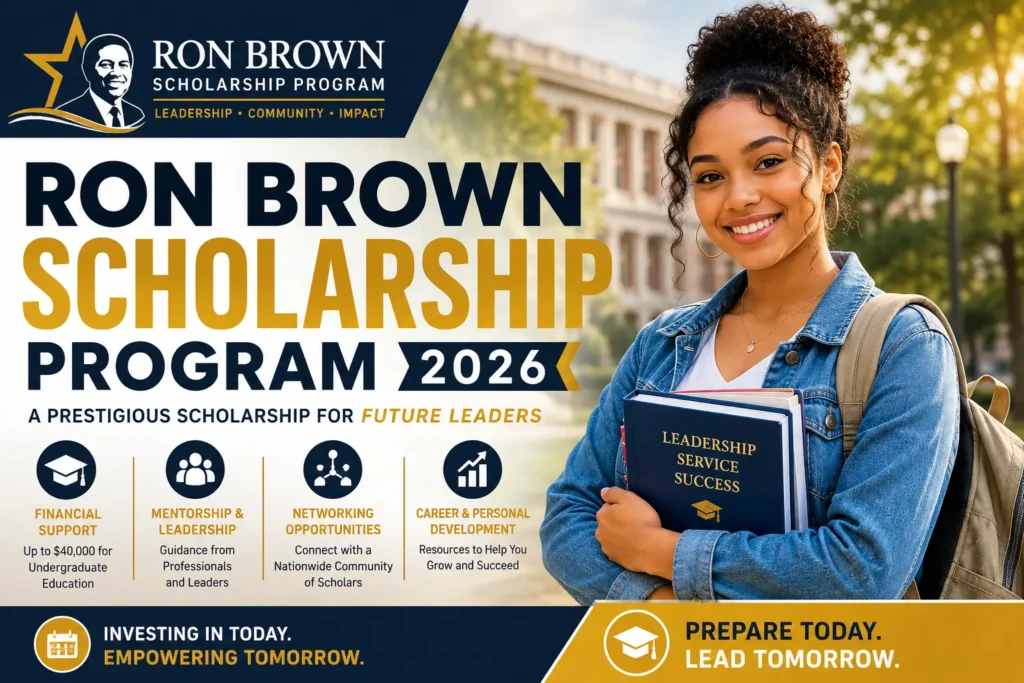
Before submitting your application for the Ron Brown Scholarship Program, review this checklist to ensure everything is complete and accurate.
Academic Documents
- ✅ Official high school transcript
- ✅ Strong academic record
- ✅ Updated résumé or activity list
- Application Materials
- ✅ Completed application form
- ✅ Personal essay(s)
- ✅ Proofread all written responses
- ✅ Accurate contact information
Recommendations
- ✅ Requested recommendation letters early
- ✅ Confirmed letters have been submitted (if required)
Leadership & Service
- ✅ Included leadership roles
- ✅ Highlighted measurable community impact
- ✅ Explained long-term commitment to service
Final Review
- ✅ Checked grammar and spelling
- ✅ Verified dates and achievements
- ✅ Ensured all required documents are included
- ✅ Submitted before the deadline
A careful final review can help you avoid simple mistakes that might weaken an otherwise strong application.
Common Myths About the Ron Brown Scholarship Program
Many students are discouraged by misinformation. Here are some common myths and the facts behind them.
Myth 1: Only students with perfect grades can win.
Fact: Strong academics are important, but the programme also values leadership, service, integrity, and character.
Myth 2: Leadership only means being class president.
Fact: Leadership can be demonstrated in many ways, including mentoring, organising community events, leading volunteer projects, or taking initiative in your school or local community.
Myth 3: Community service is less important than grades.
Fact: Meaningful community service is a key part of the programme’s mission and is considered alongside academic achievement.
Myth 4: Financial need alone guarantees selection.
Fact: Financial need is one factor, but applicants are evaluated through a holistic review that also considers leadership, academic performance, and personal character.
Myth 5: You need dozens of extracurricular activities.
Fact: A few meaningful, long-term commitments are often more impressive than participation in many activities with limited involvement.
How the Ron Brown Scholarship Program Can Shape Your Future
Receiving the Ron Brown Scholarship Program award can provide benefits that extend far beyond financial assistance.
Scholars often gain access to:
- Leadership development opportunities
- Professional mentoring
- Networking with accomplished alumni
- Career guidance
- Internship opportunities
- Personal and professional growth resources
These experiences can help students build confidence, develop leadership skills, and prepare for success in college and beyond.
Tips for Parents and School Counsellors
Parents and counsellors play an important role in helping students prepare competitive applications.
They can assist by:
- Encouraging early planning
- Reviewing essays for clarity
- Helping students organise documents
- Supporting leadership and volunteer opportunities
- Providing encouragement throughout the application process
- Ensuring deadlines are not missed
A supportive network can make the application process less stressful and more organised.
Additional Scholarship Opportunities to Explore
While applying for the Ron Brown Scholarship Program, students should also research other scholarships that match their academic achievements, leadership experiences, interests, and career goals.
Applying to multiple reputable scholarship programmes can increase the likelihood of receiving financial support for college.
Conclusion
The Ron Brown Scholarship Program remains one of the most respected scholarship opportunities available to high-achieving students who demonstrate academic excellence, leadership, integrity, community service, and financial need.
Preparing a strong application requires more than excellent grades. Students who present authentic essays, meaningful leadership experiences, consistent community involvement, and clear career goals often stand out during the selection process.
Although the application process is competitive, careful planning, attention to detail, and genuine commitment to serving others can help applicants present their best work.
Whether your goal is to study engineering, medicine, business, education, science, technology, law, or another field, the Ron Brown Scholarship Program can help reduce financial barriers while connecting you with valuable leadership and professional development opportunities.
Begin preparing early, stay organised, and submit a thoughtful application that reflects your unique experiences and aspirations.
Frequently Asked Questions
What is the Ron Brown Scholarship Program?
The Ron Brown Scholarship Program is a merit-based scholarship that supports academically talented students who demonstrate leadership, community service, financial need, and a commitment to making a positive impact.
Who is eligible to apply in Ron Brown Scholarship ?
Eligibility requirements are determined by the programme each application cycle. Applicants should always review the latest official eligibility criteria before applying.
Is the Ron Brown Scholarship renewable?
The programme is designed to support scholars throughout their undergraduate education, subject to the programme’s renewal requirements.
Does the Ron Brown Scholarship cover all college expenses?
The scholarship provides significant financial support, but whether it covers all expenses depends on factors such as the cost of attendance and any additional financial aid a student receives.
Is leadership required for Ron Brown Scholarship?
Yes. Leadership is one of the key qualities considered during the selection process, alongside academic achievement, community service, and personal character.
Can I apply if I already receive another scholarship ?
In many cases, students may receive multiple scholarships. However, applicants should review the specific terms and conditions of each scholarship programme.
What types of colleges are eligible for Ron Brown Scholarship ?
Applicants should consult the official programme guidelines to confirm which accredited institutions meet the scholarship’s requirements.
How competitive is the Ron Brown Scholarship Program?
The programme is highly competitive because it attracts many outstanding applicants each year. Strong academics, leadership, service, and a compelling application can improve your chances.
How can I make my application stand out in Ron Brown Scholarship ?
Focus on authentic storytelling, demonstrate measurable leadership and community impact, secure strong recommendation letters, and carefully proofread every part of your application.
Where can I find official information of Ron Brown Scholarship ?
Always rely on the official Ron Brown Scholarship Program website for the latest eligibility requirements, deadlines, application instructions, and updates.