
Introduction
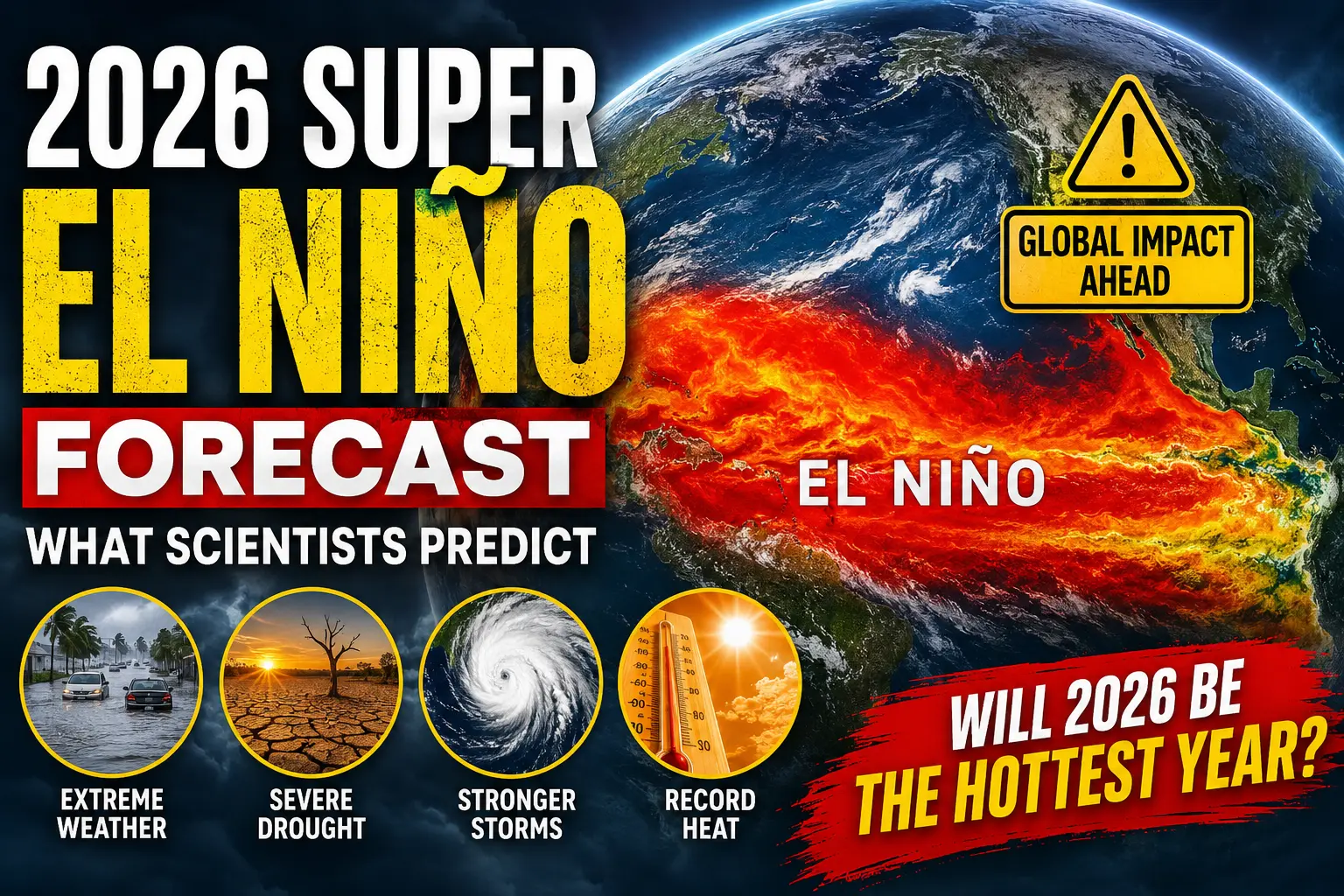
The 2026 Super El Niño Forecast is attracting global attention as scientists monitor changing Pacific Ocean conditions. Understanding the 2026 Super El Niño Forecast can help governments, businesses, and individuals prepare for possible climate impacts.
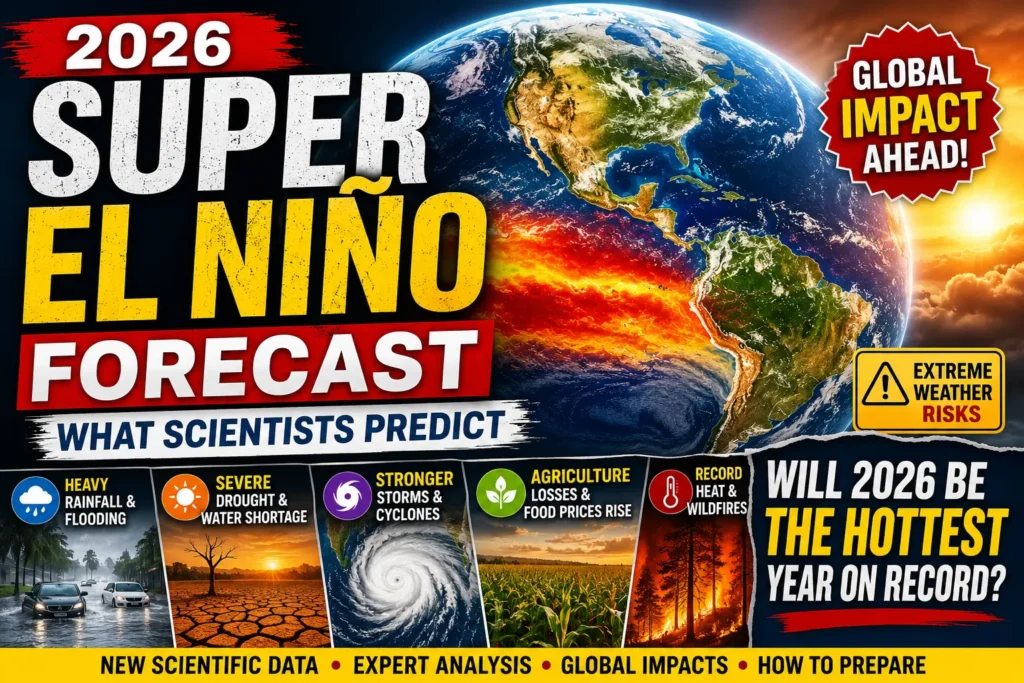
A Super El Niño forecast is not just a weather event—it can influence global temperatures, rainfall patterns, drought conditions, agriculture, food prices, energy consumption, and even economic stability. While climate experts continue monitoring ocean temperatures in the Pacific Ocean, early forecasts suggest that weather patterns in 2026 may be heavily influenced by changing ocean-atmosphere interactions.
In this comprehensive guide, we’ll explore the 2026 Super El Niño Forecast, how El Niño works, the latest scientific expectations, potential impacts on different continents, and what individuals and businesses should do to prepare.ReaDNow
2026 Super El Niño Forecast: Latest Scientific Updates?
El Niño is a naturally occurring climate phenomenon characterized by unusually warm sea surface temperatures in the central and eastern Pacific Ocean.
Normally, trade winds push warm water toward Asia and Australia. During an El Niño event, these winds weaken, allowing warm water to move eastward toward the Americas.wikipedia reports about 2026 super el nino
This shift affects:
- Global weather patterns
- Rainfall distribution
- Hurricane activity
- Agricultural productivity
- Ocean ecosystems
- Global temperatures
El Niño is part of the broader El Niño-Southern Oscillation (ENSO) cycle, which includes:
El Niño
Warmer-than-average Pacific Ocean temperatures.
La Niña
Cooler-than-average Pacific Ocean temperatures.
Neutral Phase
Neither warming nor cooling dominates.
What Is a Super El Niño?
A Super El Niño is an exceptionally strong El Niño event where ocean temperature anomalies become significantly higher than average.
Historically, major Super El Niño events occurred in:
- 1982–1983
- 1997–1998
- 2015–2016
These events caused:
- Severe floods
- Historic droughts
- Agricultural losses
- Coral bleaching
- Record global temperatures
The 2015–2016 Super El Niño, for example, contributed to some of the hottest years ever recorded globally.
Why the 2026 Super El Niño Forecast Matters
Scientists closely monitor the Pacific Ocean because ocean temperatures often provide early warning signs of future climate conditions.
Several factors make the 2026 Super El Niño Forecast especially important:
Rising Global Temperatures
Climate change has increased average global temperatures, meaning future El Niño events may have stronger impacts than historical ones.
Agriculture Concerns
Millions of farmers rely on predictable rainfall patterns. Changes in precipitation can significantly affect crop yields.
Extreme Weather Risks
Strong El Niño conditions can increase:
- Flooding
- Heatwaves
- Droughts
- Wildfires
- Severe storms
Economic Impacts
Weather-related disasters can disrupt:
- Food supply chains
- Transportation systems
- Energy markets
- Insurance industries
Current Scientific Outlook for 2026
As of current climate modeling trends, scientists remain cautious about declaring a confirmed Super El Niño for 2026.
Forecast models generally indicate:
- Ongoing Pacific Ocean monitoring
- Potential warming trends
- Possibility of ENSO fluctuations
- Uncertainty regarding event strength
Climate forecasting becomes less accurate beyond several months, making long-range predictions challenging.
However, researchers are paying attention to:
- Sea surface temperature anomalies
- Trade wind behavior
- Subsurface ocean heat content
- Atmospheric pressure patterns
These indicators help determine whether conditions may support a strong El Niño event.
Key Indicators Scientists Are Watching
1. Pacific Ocean Temperatures
Ocean temperatures are the primary signal used to identify developing El Niño conditions.
Scientists monitor:
- Niño 3.4 region
- Eastern Pacific temperatures
- Central Pacific anomalies
Persistent warming may indicate an increasing probability of El Niño development.
2. Trade Winds
Weakening trade winds often precede El Niño formation.
Meteorologists watch for:
- Wind reversals
- Reduced easterly winds
- Atmospheric circulation changes
These shifts can allow warm water to spread eastward.
3. Ocean Heat Content
Subsurface ocean temperatures often provide an early clue.
Large pools of warm water beneath the Pacific surface may eventually rise and strengthen El Niño conditions.
4. Southern Oscillation Index (SOI)
The SOI measures atmospheric pressure differences across the Pacific.
Negative SOI values frequently accompany El Niño events.
Why the 2026 Super El Niño Forecast Matters Worldwide
If a strong El Niño develops in 2026, its impacts could be felt worldwide.
North America
United States
Potential effects include:
- Wetter conditions in southern states
- Increased flooding risk in California
- Warmer winters in northern regions
- Reduced Atlantic hurricane activity
Canada
Possible outcomes:
- Milder winter temperatures
- Reduced snowfall
- Regional precipitation changes
Mexico
El Niño often increases rainfall in some regions while creating drought conditions elsewhere.
South America
South America often experiences significant El Niño impacts.
Peru and Ecuador
Potential consequences:
- Heavy rainfall
- Flooding
- Landslides
- Infrastructure damage
Brazil
Possible impacts:
- Drought in northern regions
- Increased rainfall in southern areas
- Agricultural challenges
Asia
Asia frequently experiences some of the strongest El Niño-related disruptions.
India
Potential risks:
- Weaker monsoon rainfall
- Agricultural stress
- Water shortages
Southeast Asia
Countries such as:
- Indonesia
- Malaysia
- Philippines
may experience:
- Drought conditions
- Heatwaves
- Increased wildfire risks
China
Possible impacts include:
- Flooding in some river basins
- Temperature extremes
- Agricultural disruptions
Australia
Australia is highly vulnerable to El Niño.
Potential effects:
- Reduced rainfall
- Drought conditions
- Water shortages
- Increased bushfire risk
Agricultural sectors often face major challenges during strong El Niño years.
Africa
The impact varies by region.
Southern Africa
Possible outcomes:
- Severe drought
- Food insecurity
- Crop failures
Eastern Africa
Potential effects:
- Above-average rainfall
- Flooding events
- Infrastructure challenges
Europe
El Niño’s influence in Europe is generally indirect.
Potential effects include:
- Altered winter patterns
- Temperature anomalies
- Regional precipitation shifts
Scientists continue studying these teleconnections.
Could 2026 Become the Hottest Year on Record?
One major reason the 2026 Super El Niño Forecast attracts attention is its potential relationship with global temperatures.
El Niño often adds additional warmth to Earth’s climate system.
If a strong event develops alongside ongoing greenhouse gas emissions, 2026 could rank among the warmest years ever observed.
Possible consequences include:
- More frequent heatwaves
- Record-breaking temperatures
- Increased energy demand
- Public health concerns
Impact on Agriculture
Agriculture is one of the sectors most vulnerable to El Niño.
Crops Potentially Affected
- Wheat
- Corn
- Rice
- Soybeans
- Coffee
- Sugar
Possible Challenges
- Drought damage
- Flood-related crop losses
- Irrigation stress
- Higher production costs
Farmers often use seasonal forecasts to adjust planting strategies.
Impact on Food Prices
Weather disruptions can affect food production globally.
Potential outcomes include:
- Reduced harvests
- Supply shortages
- Higher transportation costs
- Increased grocery prices
Consumers may notice rising costs for:
- Grains
- Fruits
- Vegetables
- Meat products
Impact on Water Resources
A strong El Niño can significantly alter water availability.
Some regions may experience:
- Reservoir replenishment
- Increased river flows
Others may face:
- Water scarcity
- Drought conditions
- Groundwater depletion
Water management agencies closely monitor ENSO forecasts for planning purposes.
Impact on Energy Markets
Weather changes can affect energy demand.
Increased Cooling Demand
Hotter temperatures often increase:
- Air conditioning use
- Electricity consumption
Hydropower Challenges
Drought conditions may reduce:
- Reservoir levels
- Hydroelectric generation
Energy providers often incorporate El Niño forecasts into long-term planning.
Wildfire Risks During a Super El Niño forecast
Many regions become more vulnerable to wildfires during strong El Niño events.
High-risk areas may include:
- Australia
- Indonesia
- Western United States
- Southern Africa
Contributing factors include:
- Low rainfall
- High temperatures
- Dry vegetation
- Strong winds
Effects on Marine Ecosystems
Ocean warming affects marine life significantly.
Potential consequences:
Coral Bleaching
Higher water temperatures stress coral reefs.
Fish Migration
Species may move toward cooler waters.
Ecosystem Disruption
Changes in ocean currents can affect:
- Fisheries
- Biodiversity
- Coastal economies
How Businesses Should Prepare 2026 super el nino forecast
Organizations can reduce risks through proactive planning.
Risk Assessment
Identify climate-sensitive operations.
Supply Chain Diversification
Avoid dependence on a single region.
Resource Management
Prepare for:
- Water shortages
- Energy demand spikes
- Transportation disruptions
Insurance Review
Evaluate coverage for weather-related risks.
How Individuals Can Prepare
Households can also take practical steps.
Emergency Planning
Prepare for:
- Flooding
- Heatwaves
- Storms
Water Conservation
Develop strategies for potential shortages.
Property Protection
Inspect drainage systems and emergency supplies.
Stay Informed
Monitor official weather updates regularly.
Climate Change and Future Super El Niño Events
Scientists continue studying how climate change may influence ENSO behavior.
Key questions include:
- Will El Niño events become stronger?
- Will extreme rainfall increase?
- Could droughts become more severe?
- How will global warming interact with ENSO cycles?
While uncertainties remain, many studies suggest that climate change may amplify the impacts associated with future El Niño events.
Expert Expectations for the 2026 Super El Niño Forecast
Current expert consensus emphasizes caution.
Important points include:
- Forecast confidence decreases with longer time horizons.
- Ocean conditions can change rapidly.
- Multiple climate models must be monitored.
- Official forecasts will become more accurate as 2026 approaches.
Rather than focusing solely on whether a Super El Niño occurs, experts recommend preparing for a wide range of climate scenarios.
Conclusion
While no official confirmation exists yet, the 2026 Super El Niño Forecast will become clearer as more climate data becomes available. Monitoring the 2026 Super El Niño Forecast regularly can help communities prepare for extreme weather. Staying informed about the 2026 Super El Niño Forecast is the best way to reduce climate-related risks.
If a strong El Niño develops, its effects could include extreme weather, agricultural disruptions, water resource challenges, rising food prices, and increased global temperatures. Understanding these potential impacts allows individuals and organizations to prepare more effectively.
As new climate data becomes available, forecast accuracy will improve. Staying informed through reliable meteorological agencies remains the best strategy for navigating the uncertainties surrounding the 2026 Super El Niño Forecast.
FAQs About the 2026 Super El Niño Forecast
What is the 2026 Super El Niño Forecast?
The 2026 Super El Niño Forecast refers to scientific predictions regarding the possibility of a very strong El Niño event developing during 2026 and influencing global weather patterns.
Has a Super El Niño been confirmed for 2026?
No. Scientists continue monitoring Pacific Ocean conditions, and no official confirmation of a Super El Niño for 2026 has been issued.
How does El Niño affect weather?
El Niño alters ocean temperatures and atmospheric circulation, leading to changes in rainfall, temperature, drought, and storm patterns worldwide.
Could 2026 become the hottest year on record?
A strong El Niño combined with ongoing global warming could contribute to exceptionally high global temperatures, although no outcome is guaranteed.
Which countries are most affected by El Niño?
Countries commonly affected include the United States, Peru, Ecuador, Brazil, India, Indonesia, Australia, South Africa, and several Southeast Asian nations.
How can farmers prepare for a possible El Niño?
Farmers can monitor seasonal forecasts, diversify crops, improve irrigation efficiency, and implement drought management strategies.
Does El Niño increase flooding?
Yes. Certain regions often experience above-average rainfall and flooding during strong El Niño events.
How often do Super El Niño events occur?
Super El Niño events are relatively rare and typically occur only a few times per century.
Does El Niño cause droughts?
Yes. Some areas receive significantly less rainfall, increasing drought risk and water shortages.
Why is the 2026 Super El Niño Forecast important?
It helps governments, businesses, and communities prepare for potential climate-related impacts, reducing risks and improving resilience.