IN FRANCE LANGUAGE
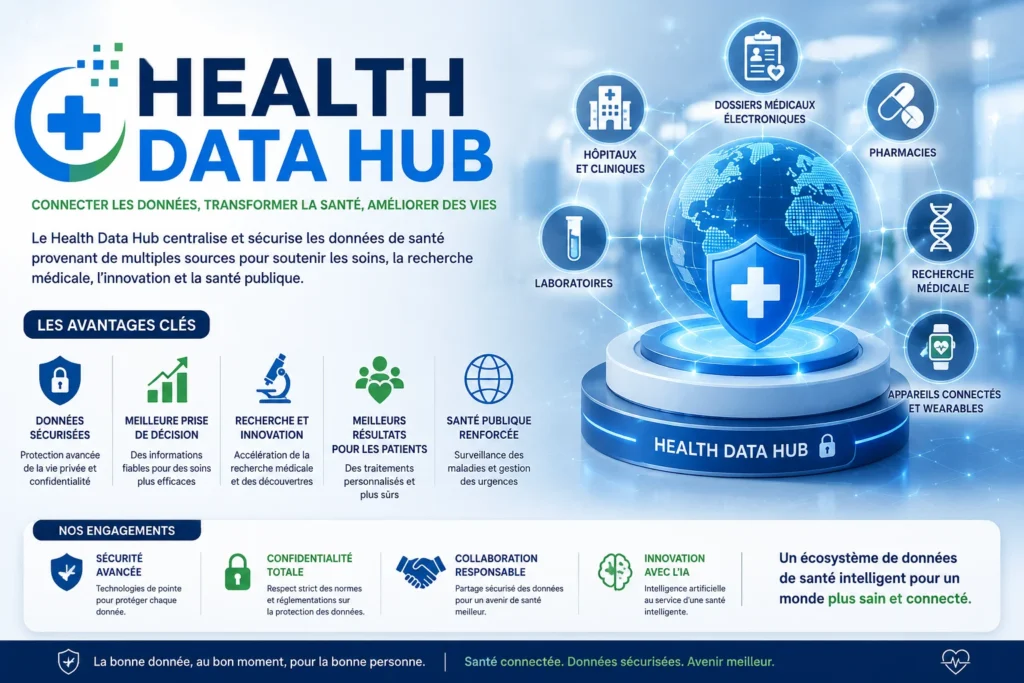
Le Health Data Hub représente une avancée majeure dans la transformation numérique du secteur de la santé. Il permet de centraliser les données médicales provenant des hôpitaux, des laboratoires, des pharmacies, des établissements de recherche et d’autres acteurs du système de santé au sein d’une plateforme hautement sécurisée. Grâce à cette approche, les professionnels de santé peuvent accéder à des informations plus complètes afin d’améliorer la qualité des soins, d’accélérer les diagnostics et de faciliter la coordination entre les différents établissements. Les données sont protégées par des technologies modernes telles que le chiffrement, l’anonymisation et des mécanismes de contrôle d’accès stricts. En outre, le Health Data Hub favorise la recherche scientifique en offrant aux chercheurs des ensembles de données fiables et standardisés. Cette infrastructure contribue également au développement de nouvelles solutions médicales, à la prévention des maladies et à une meilleure compréhension des besoins de santé de la population. En combinant innovation, sécurité et gouvernance responsable, le Health Data Hub devient un pilier essentiel de la médecine moderne.Readmore
Healthcare is changing rapidly, and data has become one of the most valuable resources in modern medicine. Every hospital visit, laboratory test, prescription, medical scan, and diagnosis generates important health information. When this information is stored securely and shared responsibly, it helps doctors provide better treatment, researchers discover new medicines, and healthcare organizations improve patient care.
This is where the Health Data Hub plays a vital role.
A Health Data Hub is a secure digital platform that collects, manages, protects, and enables the responsible use of healthcare data from multiple sources. Instead of keeping patient information isolated within individual hospitals or clinics, a health data hub allows authorized professionals and researchers to access valuable datasets while maintaining strict privacy and security standards.
Today, governments, healthcare organizations, universities, pharmaceutical companies, and AI researchers are increasingly relying on health data hubs to improve medical research, detect diseases earlier, personalize treatments, and make healthcare systems more efficient.
In this comprehensive guide, you’ll learn exactly what a Health Data Hub is, how it works, why it’s important, its benefits, challenges, future trends, and how it is transforming healthcare worldwide.
What Is a Health Data Hub?
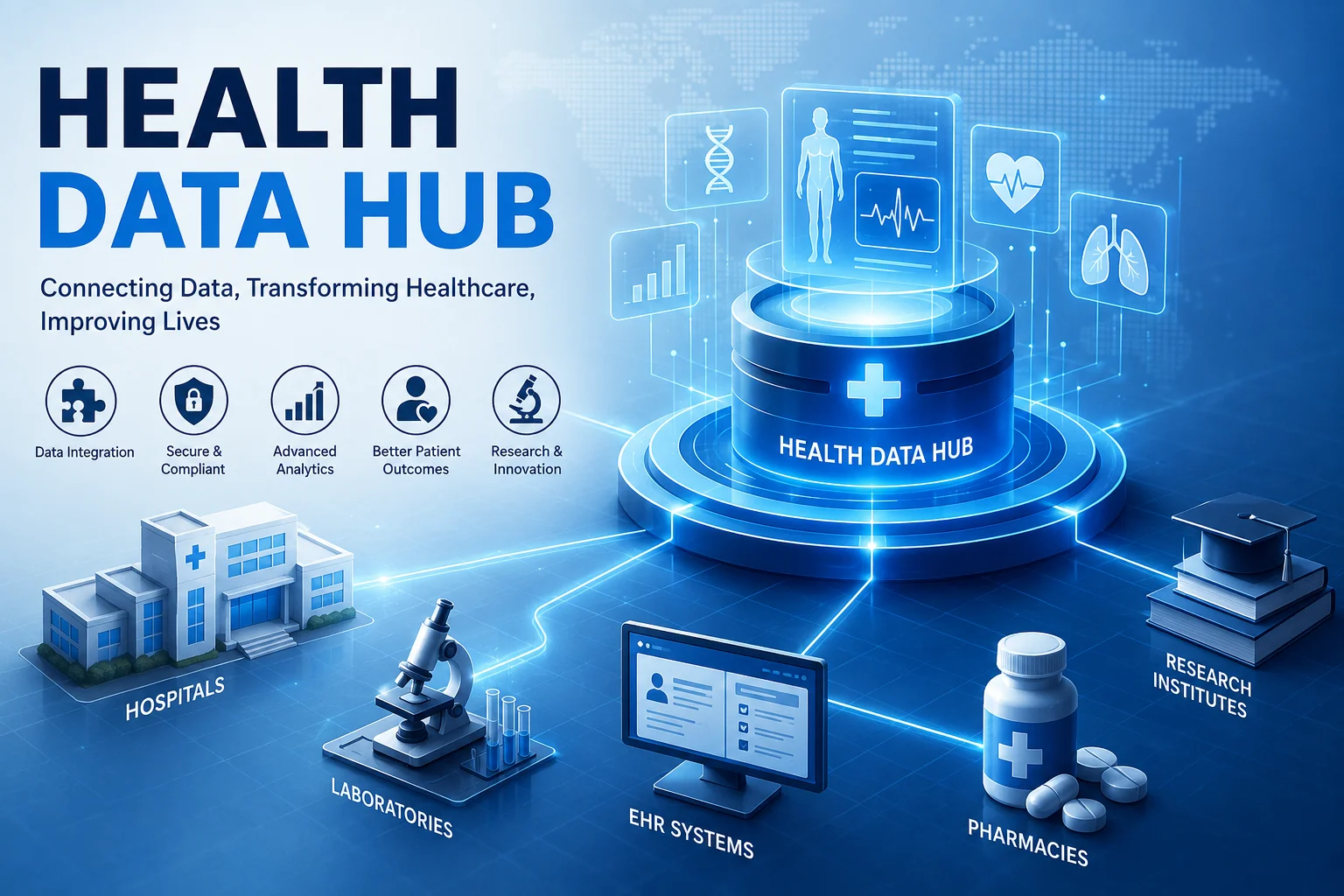
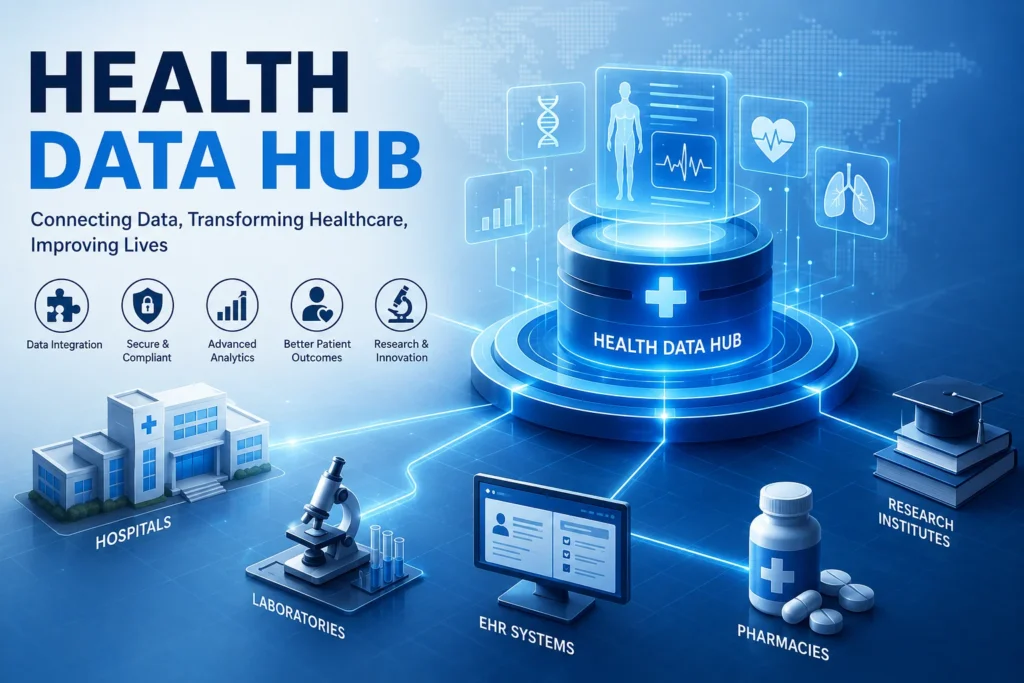
A Health Data Hub is a centralized and secure digital infrastructure designed to collect healthcare data from different sources and make it available for approved medical research, healthcare improvements, and innovation.
Rather than storing information in isolated systems, a health data hub connects data from:
- Hospitals
- Clinics
- Medical laboratories
- Pharmacies
- Electronic Health Records (EHR)
- Insurance systems
- Public health databases
- Medical imaging centers
- Research institutions
- Wearable health devices
- Genomic databases
This integrated approach creates a more complete picture of patient health while ensuring sensitive information remains protected.
The primary goal is simple:
Use healthcare data responsibly to improve patient outcomes while protecting privacy.
Why Health Data Matters More Than Ever
Healthcare produces enormous amounts of information every single day.
Examples include:
- Blood test reports
- MRI scans
- X-rays
- CT scans
- Vaccination records
- Prescription history
- Surgical records
- Chronic disease management
- Hospital admissions
- Emergency visits
- Mental health records
- Fitness tracker data
- Smartwatch health monitoring
Without centralized systems, this information often remains scattered across different organizations.
A Health Data Hub solves this problem by securely connecting these data sources, allowing healthcare professionals to make more informed decisions.
How Does a Health Data Hub Work?
A Health Data Hub follows several important steps to ensure healthcare information is useful while remaining secure.
Step 1: Data Collection
Information is gathered from multiple healthcare providers, including hospitals, laboratories, clinics, pharmacies, and digital health applications.
The collected data may include:
- Medical history
- Diagnosis
- Medications
- Laboratory results
- Medical images
- Treatment plans
- Clinical notes
Step 2: Data Standardization
Healthcare systems often store information using different formats.
A Health Data Hub converts these records into standardized formats so they can work together seamlessly.
This process improves:
- Accuracy
- Compatibility
- Data quality
- Research efficiency
Step 3: Data Protection
Before researchers can access healthcare data, personal identifiers are removed or encrypted.
Sensitive information such as:
- Names
- Addresses
- Phone numbers
- National IDs
- Insurance numbers
is either anonymized or pseudonymized depending on legal requirements.
Step 4: Secure Storage
Modern Health Data Hubs use advanced cloud infrastructure combined with strong cybersecurity technologies.
Security measures include:
- End-to-end encryption
- Multi-factor authentication
- Continuous monitoring
- Access logging
- Backup systems
- Disaster recovery
- Zero Trust architecture
Step 5: Authorized Access
Only approved organizations can access healthcare datasets.
These typically include:
- Universities
- Medical researchers
- Public health agencies
- Government departments
- Pharmaceutical companies
- Healthcare policy experts
Each request undergoes strict ethical and legal review.
Key Components of a Health Data Hub
Every modern Health Data Hub consists of multiple interconnected components.
| Component | Purpose |
|---|---|
| Data Integration | Combines information from multiple systems |
| Data Governance | Controls who can access information |
| Privacy Protection | Protects patient identities |
| Security Infrastructure | Prevents cyberattacks |
| AI Analytics | Finds healthcare patterns |
| Research Platform | Supports medical discoveries |
| Reporting Dashboard | Provides healthcare insights |
| API Integration | Connects healthcare software |
Main Objectives of a Health Data Hub
The purpose extends far beyond simply storing medical records.
Les avantages du Health Data Hub vont bien au-delà du simple stockage des données médicales. Il améliore la prise de décision clinique, facilite la recherche biomédicale et favorise le développement de traitements innovants grâce à l’analyse de vastes ensembles de données. L’intelligence artificielle et le machine learning exploitent ces informations pour détecter des tendances, identifier les facteurs de risque et assister les professionnels de santé dans leurs décisions. Les autorités sanitaires peuvent également utiliser ces données pour surveiller les maladies, planifier les ressources hospitalières et répondre plus efficacement aux urgences sanitaires. Toutefois, la protection de la vie privée demeure une priorité absolue. Les données personnelles sont sécurisées grâce au chiffrement, à l’authentification multifactorielle, aux audits de sécurité et à des politiques de gouvernance rigoureuses. Malgré certains défis, tels que l’interopérabilité des systèmes ou les risques liés à la cybersécurité, le Health Data Hub constitue aujourd’hui un outil stratégique pour améliorer la qualité des soins, renforcer la recherche médicale et accélérer l’innovation dans le domaine de la santé
The Health Data Hub is transforming modern healthcare by connecting hospitals, laboratories, research centers, pharmacies, wearable devices, and public health organizations into one secure platform.
It improves patient care by providing healthcare professionals with access to high-quality medical information.
The platform also supports medical research, artificial intelligence, cybersecurity, and better clinical decision-making while protecting patient privacy..
Its objectives include:
Improve Patient Care
Doctors gain access to comprehensive medical histories, reducing medical errors and improving treatment decisions.
Accelerate Medical Research
Researchers can analyze millions of health records to identify disease trends, evaluate treatments, and develop innovative therapies faster.
Support Artificial Intelligence
AI systems require large datasets for training.
Health Data Hubs provide high-quality healthcare information that enables AI models to detect diseases, predict patient risks, and assist clinicians.
Enhance Public Health
Governments can identify disease outbreaks earlier, monitor vaccination coverage, and improve emergency preparedness.
Improve Healthcare Planning
Healthcare administrators use data to understand:
- Hospital capacity
- Resource allocation
- Staffing requirements
- Regional health trends
- Healthcare spending
This leads to better policy decisions and improved healthcare services.
Types of Data Stored in Health Data Hubs
Modern platforms manage diverse healthcare information.
Clinical Data
- Diagnoses
- Symptoms
- Treatments
- Surgical records
- Medications
Laboratory Data
- Blood tests
- Urine tests
- Biochemistry
- Pathology reports
Medical Imaging
- MRI
- CT Scan
- Ultrasound
- PET Scan
- X-ray
Genomic Data
DNA sequencing allows personalized medicine based on an individual’s genetic profile.
Wearable Device Data
Smart devices continuously monitor:
- Heart rate
- Blood pressure
- Sleep quality
- Oxygen saturation
- Physical activity
These real-time insights contribute to preventive healthcare.
Benefits of Using a Health Data Hub
Healthcare organizations worldwide are investing heavily in Health Data Hubs because of the significant benefits they provide.
Some of the biggest advantages include:
Better Clinical Decisions
Doctors gain access to more complete patient information, leading to faster diagnoses and improved treatment outcomes.
Faster Medical Research
Researchers can analyze large datasets in weeks instead of years.
Early Disease Detection
AI systems trained on healthcare data can identify diseases before symptoms become severe.
Personalized Medicine
Treatment plans become more tailored to each patient’s unique medical history and genetics.
Improved Healthcare Efficiency
Hospitals reduce duplicate testing, lower operational costs, and improve coordination between departments.
Benefits, Real-World Applications, AI, Challenges & Data Security
Major Benefits of a Health Data Hub
IN FRANCE LANGUAGE
L’avenir du Health Data Hub repose sur l’innovation technologique et la collaboration internationale. Avec l’évolution de l’intelligence artificielle, du cloud computing et des standards d’interopérabilité comme FHIR, les plateformes de données de santé deviendront encore plus performantes et sécurisées. Elles permettront une médecine plus personnalisée, une meilleure prévention des maladies et une gestion plus efficace des systèmes de santé. Les patients devraient également jouer un rôle plus actif en contrôlant l’accès à leurs données et en participant davantage à la recherche médicale. Pour garantir le succès de ces plateformes, il sera essentiel de maintenir une gouvernance transparente, une cybersécurité renforcée et un strict respect des réglementations relatives à la protection des données. Les organisations de santé devront investir dans la qualité des données, la formation des professionnels et les infrastructures numériques modernes. Grâce à ces évolutions, le Health Data Hub continuera de soutenir les chercheurs, les médecins et les décideurs tout en améliorant durablement les soins apportés aux patients et en favorisant une innovation responsable dans le secteur de la santé.
As healthcare becomes increasingly digital, Health Data Hubs offer advantages that extend beyond hospitals. Patients, healthcare professionals, researchers, governments, and technology companies all benefit from secure, high-quality health data.
1. Improved Patient Care
One of the biggest advantages of a Health Data Hub is providing doctors with a complete view of a patient’s medical history.
Instead of relying on fragmented records from multiple hospitals or clinics, healthcare professionals can access relevant information more efficiently (where legally authorized). This helps them:
- Make faster diagnoses
- Reduce treatment delays
- Avoid duplicate medical tests
- Minimize medication errors
- Coordinate care across specialists
Ultimately, patients receive safer, more personalized care.
2. Faster Medical Research
Medical research traditionally takes years because researchers must gather data from multiple institutions.
A Health Data Hub simplifies this process by providing approved researchers with access to large, standardized datasets.
Researchers can use these datasets to:
- Study disease progression
- Evaluate treatment effectiveness
- Identify risk factors
- Develop preventive strategies
- Discover new therapies
- Improve clinical guidelines
Large datasets also make research findings more reliable.
3. Better Disease Surveillance
Public health organizations rely on timely data to monitor diseases.
A Health Data Hub can help identify:
- Emerging infectious diseases
- Seasonal illness trends
- Vaccination coverage
- Chronic disease prevalence
- Regional health disparities
This information supports faster public health responses and better planning.
4. Personalized Medicine
Healthcare is moving away from a one-size-fits-all approach.
Health Data Hubs support personalized medicine by combining information such as:
- Medical history
- Genetic data
- Lifestyle information
- Previous treatments
- Medication responses
Doctors can use these insights to recommend treatments that are more likely to work for an individual patient.
5. Reduced Healthcare Costs
Healthcare systems often spend unnecessary money on:
- Duplicate laboratory tests
- Repeated imaging
- Administrative inefficiencies
- Paper-based records
- Poor coordination
By improving data sharing and reducing duplication, Health Data Hubs can contribute to more efficient healthcare operations.
Real-World Applications of Health Data Hubs
Health Data Hubs support many practical healthcare activities.
Clinical Decision Support
Doctors can review historical patient data to support diagnosis and treatment planning.
Examples include:
- Identifying medication allergies
- Reviewing previous surgeries
- Tracking chronic diseases
- Monitoring long-term treatment outcomes
Cancer Research
Cancer researchers analyze millions of anonymized health records to better understand:
- Risk factors
- Treatment effectiveness
- Survival rates
- Early detection methods
- Precision oncology
These insights can lead to improved therapies and patient outcomes.
Drug Development
Developing new medicines is expensive and time-consuming.
Health Data Hubs help pharmaceutical researchers by:
- Identifying eligible clinical trial participants
- Monitoring medication safety
- Measuring treatment effectiveness
- Detecting rare side effects
- Supporting real-world evidence studies
This can improve research efficiency while maintaining ethical standards.
Chronic Disease Management
Millions of people live with chronic conditions such as:
- Diabetes
- Heart disease
- Asthma
- Hypertension
- Kidney disease
Health Data Hubs help clinicians monitor long-term trends and coordinate ongoing care.
Emergency Healthcare Planning
During public health emergencies, secure data sharing can help healthcare organizations:
- Monitor hospital capacity
- Allocate medical equipment
- Track disease spread
- Predict healthcare demand
- Improve emergency response
Health Data Hub and Artificial Intelligence
Artificial Intelligence (AI) has become one of the most important technologies in modern healthcare.
However, AI systems need high-quality data to learn effectively.
Health Data Hubs provide structured, diverse datasets that help train AI models while following privacy and governance requirements.
AI can assist healthcare by:
- Detecting diseases in medical images
- Predicting patient risks
- Supporting clinical decision-making
- Identifying health trends
- Optimizing hospital operations
- Analyzing large research datasets
It is important to note that AI should support healthcare professionals rather than replace their clinical judgment.
Machine Learning in Healthcare
Machine Learning is a branch of AI that identifies patterns in data.
Using information from a Health Data Hub, machine learning models may help with:
Predicting Hospital Readmissions
Hospitals can identify patients who may need additional follow-up care after discharge.
Identifying High-Risk Patients
Algorithms can analyze multiple health factors to help clinicians prioritize preventive interventions.
Medical Image Analysis
AI systems can assist radiologists by highlighting potential abnormalities in:
- X-rays
- CT scans
- MRI scans
- Mammograms
These tools support, but do not replace, expert medical review.
Personalized Treatment Recommendations
Machine learning can analyze previous treatment outcomes to support more individualized care plans.
Health Data Hub and Big Data Analytics
Healthcare generates enormous volumes of information every day.
Big Data Analytics helps transform raw information into useful insights.
Common applications include:
- Disease trend analysis
- Population health monitoring
- Healthcare quality improvement
- Resource planning
- Clinical performance evaluation
- Cost optimization
By analyzing data at scale, healthcare organizations can make more informed decisions.
Data Privacy in Health Data Hubs
Health information is among the most sensitive categories of personal data.
For this reason, protecting privacy is a core responsibility of every Health Data Hub.
Common privacy measures include:
- Data anonymization
- Pseudonymization
- Encryption
- Role-based access controls
- Audit logs
- Secure authentication
- Compliance with applicable data protection laws
- Regular security assessments
These safeguards help reduce the risk of unauthorized access while enabling legitimate healthcare and research uses.
Data Security Measures
Modern Health Data Hubs typically use multiple layers of security.
End-to-End Encryption
Data is encrypted during transmission and storage to help protect confidentiality.
Multi-Factor Authentication (MFA)
Authorized users verify their identity using multiple authentication methods.
Access Control
Not every user can access every dataset.
Permissions are granted according to roles, responsibilities, and approved purposes.
Continuous Monitoring
Security teams monitor systems for unusual activity and respond to potential threats.
Disaster Recovery
Regular backups and recovery plans help maintain service continuity in the event of system failures.
Challenges Facing Health Data Hubs
Although Health Data Hubs provide many benefits, implementing them also involves important challenges.
1. Privacy Concerns
Patients may worry about how their health information is collected, stored, and used.
Building trust requires transparency, strong governance, and clear communication.
2. Cybersecurity Risks
Healthcare organizations are frequent targets of cyberattacks.
Strong cybersecurity practices are essential to protect sensitive health data.
3. Data Quality
Incomplete, inconsistent, or inaccurate records can reduce the value of healthcare analytics.
Improving data quality requires standardized data collection and validation processes.
4. Interoperability
Hospitals often use different software systems.
Ensuring these systems can exchange information accurately remains a significant technical challenge.
5. Ethical Considerations
Health Data Hubs must balance innovation with ethical responsibilities.
Key considerations include:
- Respecting patient rights
- Preventing discrimination
- Avoiding misuse of data
- Ensuring transparency
- Maintaining accountability
Ethical oversight is essential for responsible data use.
Health Data Hub vs Traditional Healthcare Databases
| Feature | Health Data Hub | Traditional Database |
|---|---|---|
| Data Sources | Multiple connected systems | Usually a single organization |
| Scalability | High | Limited |
| Research Support | Extensive | Limited |
| AI Integration | Strong | Minimal |
| Data Sharing | Controlled and standardized | Often restricted |
| Security Framework | Multi-layered | Varies by organization |
| Analytics | Advanced | Basic reporting |
| Collaboration | Cross-institutional | Primarily internal |
Future, Best Practices, Myths, Conclusion & Evergreen FAQs
The Future of Health Data Hub (2026–2035)
Healthcare is becoming increasingly connected, intelligent, and data-driven. Over the next decade, Health Data Hubs are expected to play an even greater role in improving patient care, accelerating medical research, and supporting evidence-based healthcare decisions.
Some of the most significant trends include:
1. Greater AI Integration
Artificial intelligence will continue to help healthcare professionals by analyzing large datasets, identifying patterns, and supporting clinical decision-making. Future AI systems may assist with:
- Predicting disease risks
- Supporting early diagnosis
- Optimizing hospital workflows
- Personalizing treatment plans
- Monitoring public health trends
Human oversight will remain essential to ensure safe and ethical use.
2. Expansion of Precision Medicine
As genomic sequencing becomes more accessible, Health Data Hubs will combine genetic information with clinical records to support more personalized healthcare.
Potential benefits include:
- Tailored medications
- Better treatment selection
- Reduced adverse drug reactions
- Improved disease prevention strategies
3. Increased Patient Participation
Patients are becoming more involved in managing their own health.
Future Health Data Hubs may offer secure patient portals that allow individuals to:
- View portions of their health records
- Manage consent preferences
- Access laboratory results
- Share data with healthcare providers
- Track wellness information
This can encourage greater engagement in personal healthcare.
4. Global Research Collaboration
International collaboration is becoming increasingly important for studying rare diseases, emerging infections, and chronic health conditions.
Secure Health Data Hubs can support cross-border research while complying with applicable laws and ethical standards.
Cloud Computing and Health Data Hubs
Cloud technology has transformed healthcare data management.
Compared with traditional on-premises systems, cloud platforms can provide:
- Flexible storage capacity
- Faster data processing
- Improved collaboration
- High availability
- Disaster recovery capabilities
- Easier software updates
Organizations typically choose cloud services that meet healthcare security and regulatory requirements.
Interoperability: Connecting Healthcare Systems
One of the biggest challenges in healthcare is that different hospitals and clinics often use different software systems.
Interoperability enables these systems to exchange information accurately and securely.
Common interoperability standards include:
- HL7
- FHIR (Fast Healthcare Interoperability Resources)
- DICOM for medical imaging
- SNOMED CT
- LOINC
Using common standards helps improve data quality and supports better coordination of care.
Can Blockchain Improve Health Data Hubs?
Blockchain technology is sometimes explored as a way to strengthen trust and transparency in healthcare data management.
Potential applications include:
- Recording data access history
- Improving audit trails
- Supporting consent management
- Verifying data integrity
- Reducing unauthorized record modifications
While blockchain has potential in specific use cases, it is not a replacement for comprehensive healthcare data infrastructure and is not used universally.
Health Data Hub Best Practices
Organizations implementing a Health Data Hub should follow recognized best practices.
Establish Strong Data Governance
Clearly define:
- Data ownership
- Access permissions
- Approval processes
- Data retention policies
- Accountability measures
Prioritize Privacy
Healthcare organizations should:
- Minimize unnecessary data collection
- Protect patient identities
- Apply encryption
- Regularly review privacy controls
- Comply with applicable regulations
Maintain High Data Quality
Reliable healthcare insights depend on accurate data.
Best practices include:
- Standardized data entry
- Routine validation
- Error correction
- Consistent coding systems
- Staff training
Strengthen Cybersecurity
Security should include:
- Multi-factor authentication
- Continuous monitoring
- Security awareness training
- Vulnerability testing
- Backup systems
- Incident response planning
Encourage Ethical Data Use
Healthcare organizations should ensure that health data is used only for approved and legitimate purposes, with appropriate oversight and respect for patient rights.
Common Myths About Health Data Hubs
Myth 1: Everyone Can Access Patient Records
Fact: Access is restricted to authorized users and approved purposes. Robust governance and security controls are designed to prevent unauthorized access.
Myth 2: Health Data Hubs Replace Doctors
Fact: Health Data Hubs provide information that supports healthcare professionals. Medical decisions remain the responsibility of qualified clinicians.
Myth 3: All Data Is Public
Fact: Sensitive health information is protected using privacy safeguards, legal requirements, and technical security measures.
Myth 4: Only Large Hospitals Benefit
Fact: Health Data Hubs can benefit healthcare systems of various sizes by improving collaboration, research, and care coordination.
Myth 5: Health Data Hubs Only Store Patient Records
Fact: They may also support research datasets, public health information, analytics, operational planning, and quality improvement initiatives.
Why Health Data Hubs Matter
Healthcare data has become one of the most valuable resources for improving medicine.
When managed responsibly, Health Data Hubs help:
- Improve patient care
- Accelerate medical research
- Support responsible AI development
- Enhance public health monitoring
- Reduce duplicate testing
- Improve healthcare planning
- Enable evidence-based decision-making
The value of a Health Data Hub depends not only on technology but also on strong governance, security, privacy protection, and public trust.
Conclusion
The Health Data Hub represents an important step toward a more connected and data-informed healthcare ecosystem. By securely integrating information from hospitals, laboratories, research institutions, and other healthcare providers, these platforms enable better collaboration, more efficient research, and improved patient care.
At the same time, success depends on protecting patient privacy, maintaining high-quality data, and ensuring that health information is used ethically and responsibly. As technologies such as artificial intelligence, cloud computing, and interoperability standards continue to evolve, Health Data Hubs are likely to become even more valuable for healthcare systems around the world.
When implemented with strong safeguards and transparent governance, a Health Data Hub can help improve health outcomes while supporting innovation that benefits patients, clinicians, researchers, and society.Follow Us
Frequently Asked Questions (FAQs)
Qu’est-ce qu’un Health Data Hub et pourquoi est-il important ?
Un Health Data Hub est une infrastructure numérique sécurisée qui centralise et gouverne les données de santé provenant de multiples sources. Il permet un partage responsable des données pour les soins cliniques, la recherche médicale, les initiatives de santé publique et l’innovation dans le domaine de la santé, tout en garantissant des normes strictes de confidentialité et de sécurité.
Comment un Health Data Hub améliore-t-il les résultats des soins de santé ?
En intégrant les informations provenant des hôpitaux, laboratoires, pharmacies et instituts de recherche, un Health Data Hub offre une vision plus complète des données des patients. Cela favorise des décisions cliniques éclairées, réduit les examens médicaux inutiles, améliore la coordination des soins et optimise les résultats pour les patients.
Les informations des patients sont-elles protégées dans un Health Data Hub ?
Oui. Les Health Data Hubs modernes utilisent des mesures avancées de cybersécurité, telles que le chiffrement, le contrôle d’accès basé sur les rôles (RBAC), l’authentification multifactorielle (MFA), les journaux d’audit, l’anonymisation et le respect des réglementations applicables en matière de protection des données de santé.
Qui est autorisé à accéder aux données d’un Health Data Hub ?
L’accès est réservé aux professionnels de santé autorisés, aux chercheurs accrédités, aux agences de santé publique et aux organisations approuvées. Chaque demande d’accès est soumise à des règles de gouvernance, à un examen éthique et au respect des exigences légales.
Comment un Health Data Hub accélère-t-il la recherche médicale ?
Les Health Data Hubs fournissent aux chercheurs un accès sécurisé à des ensembles de données de santé standardisés et de grande qualité. Cela facilite l’étude des maladies, l’évaluation des traitements, le développement de médicaments et l’innovation fondée sur des preuves scientifiques.
What types of healthcare data are stored in a Health Data Hub?
A Health Data Hub may include electronic health records (EHRs), laboratory reports, diagnostic imaging, prescription histories, genomic data, vaccination records, wearable device information, public health statistics, and clinical research datasets, depending on its governance framework.
How does Artificial Intelligence benefit from Health Data Hubs?
Artificial Intelligence relies on high-quality healthcare datasets to develop predictive models, support diagnostic imaging analysis, identify disease patterns, optimize hospital operations, and assist clinicians in delivering more personalized patient care.
What are the biggest challenges associated with Health Data Hubs?
Key challenges include ensuring data privacy, strengthening cybersecurity, maintaining data quality, achieving interoperability between healthcare systems, complying with regulatory requirements, and fostering public trust through transparent governance.
How do Health Data Hubs support personalized medicine?
By combining clinical records, genomic information, diagnostic results, and treatment histories, Health Data Hubs enable healthcare providers to develop individualized treatment strategies tailored to each patient’s unique medical profile.
What role does cloud computing play in Health Data Hubs?
Cloud computing provides scalable storage, high-performance computing, secure collaboration, disaster recovery capabilities, and efficient data processing, making it a critical technology for modern Health Data Hub infrastructures.
What is the difference between a Health Data Hub and an Electronic Health Record (EHR)?
An Electronic Health Record (EHR) focuses on an individual patient’s clinical information within a healthcare provider, whereas a Health Data Hub securely integrates healthcare data from multiple organizations to support research, policy development, healthcare planning, and advanced analytics.
What does the future hold for Health Data Hubs?
The future of Health Data Hubs includes deeper integration with Artificial Intelligence, expanded interoperability through standards such as FHIR, greater adoption of precision medicine, enhanced patient participation, stronger cybersecurity frameworks, and increased global collaboration in healthcare research.
Can Health Data Hubs contribute to public health preparedness?
Yes. Health Data Hubs enable real-time health surveillance, monitor disease outbreaks, evaluate vaccination coverage, assess healthcare capacity, and provide valuable insights that help governments and public health organizations respond more effectively to health emergencies.
Why is data governance essential for a Health Data Hub?
Robust data governance establishes clear policies for data ownership, access permissions, ethical oversight, regulatory compliance, and accountability. It ensures healthcare data is managed responsibly while maintaining transparency and public confidence.