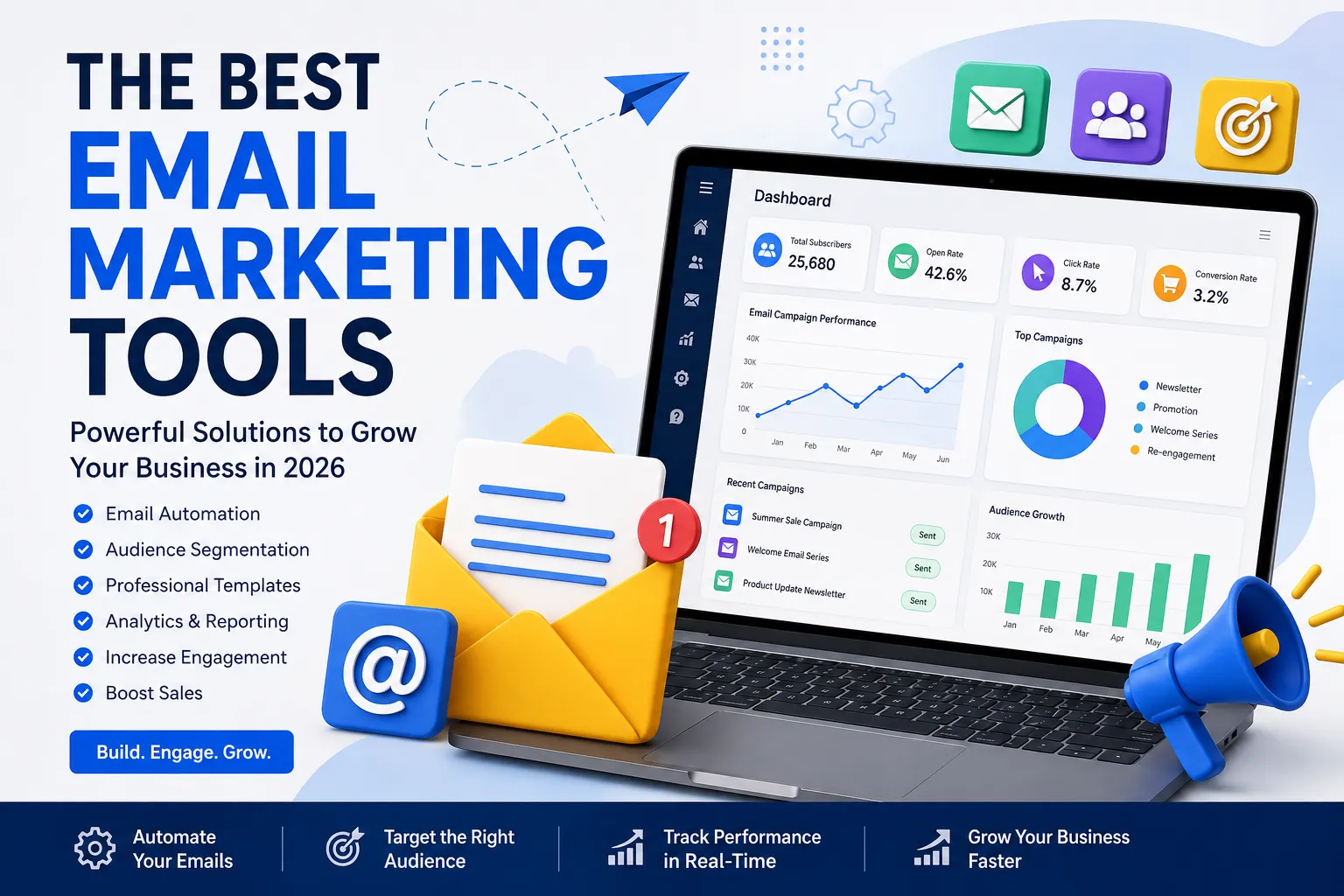
Email marketing remains one of the most effective digital marketing strategies for businesses of every size. Whether you run a small online store, a startup, or a large company, the right email marketing tools can help you build stronger customer relationships, increase sales, and improve brand loyalty. Instead of sending emails manually, these tools automate campaigns, personalize messages, and provide valuable insights into customer behavior.Read More Technology
Today, businesses rely on modern email marketing tools to create professional email campaigns, manage subscriber lists, and track important performance metrics like open rates, click-through rates, and conversions. With the growing competition in digital marketing, choosing the right platform can make a significant difference in your overall success.
In this guide, you’ll learn what email marketing tools are, why they matter, their essential features, and how they can help businesses achieve better marketing results.Email Marketing Tool for Free
What Are Email Marketing Tools?
Email marketing tools are software platforms designed to help businesses create, send, manage, and analyze email campaigns. These platforms simplify every stage of email marketing, allowing marketers to communicate with customers more efficiently while saving valuable time.
Instead of sending emails individually, businesses can use email marketing software to send newsletters, promotional offers, welcome emails, abandoned cart reminders, product updates, and personalized recommendations to thousands of subscribers at once.
Most modern email marketing platforms also include automation features that send emails automatically based on customer actions. For example, if someone signs up for your newsletter or purchases a product, the software can instantly send a customized follow-up email.
This level of automation improves customer engagement while reducing manual work for marketing teams.
Why Email Marketing Tools Are Important
Email continues to deliver one of the highest returns on investment (ROI) among digital marketing channels. Businesses use email marketing tools because they provide direct communication with customers without relying on social media algorithms.
Some major reasons why businesses invest in these tools include:
- Build long-term customer relationships
- Increase website traffic
- Promote products and services
- Recover abandoned shopping carts
- Improve customer retention
- Generate more leads
- Increase online sales
- Strengthen brand awareness
Unlike paid advertising, email marketing gives businesses full control over their audience and communication strategy.
Key Features of Email Marketing Tools
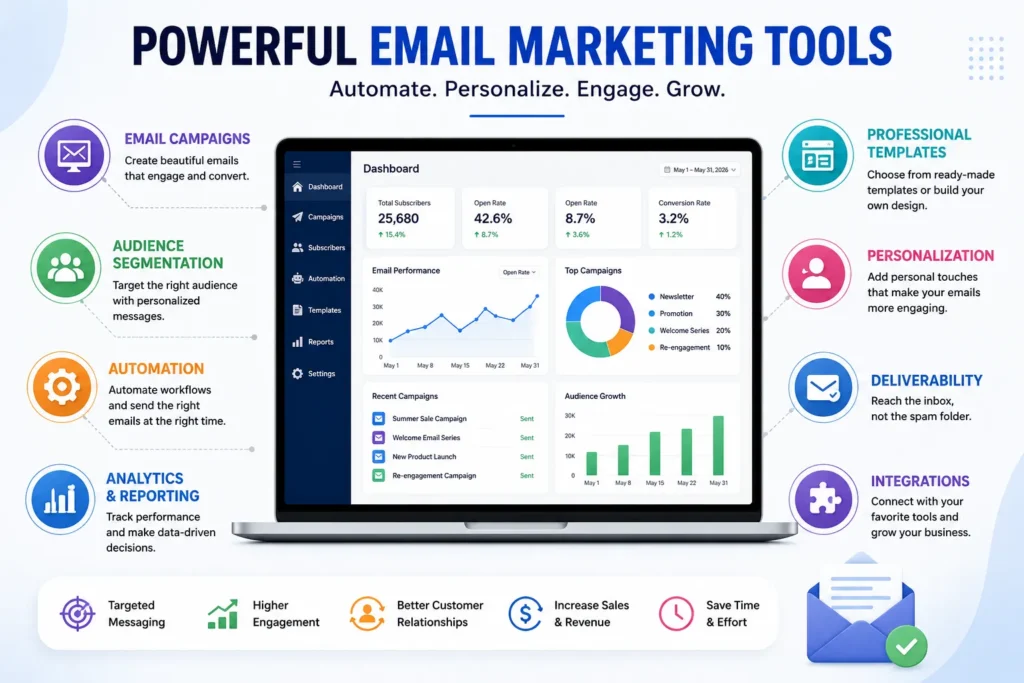
Different platforms offer different capabilities, but the best email marketing tools include several important features that improve campaign performance.
1. Drag-and-Drop Email Builder
Most modern platforms provide a visual editor that allows users to design professional emails without coding.
You can simply drag text blocks, images, buttons, videos, logos, and social media icons into your email template. This feature saves time while creating attractive emails that work well on desktop and mobile devices.
2. Email Automation
Automation is one of the biggest advantages of using email marketing software.
Instead of manually sending every email, automated workflows allow businesses to send emails based on customer behavior.
Examples include:
- Welcome emails
- Birthday emails
- Purchase confirmations
- Product recommendations
- Cart abandonment reminders
- Re-engagement campaigns
Automation keeps customers engaged even when you’re not actively managing campaigns.
3. Audience Segmentation
Every customer has different interests.
Good email marketing tools allow businesses to divide subscribers into smaller groups based on:
- Location
- Age
- Purchase history
- Interests
- Website activity
- Customer status
Sending targeted emails often leads to higher open rates, better engagement, and more conversions because subscribers receive content that matches their interests.
4. Ready-Made Templates
Creating beautiful emails from scratch can take time.
Most platforms offer professionally designed templates for:
- Newsletters
- Promotions
- Holiday campaigns
- Product launches
- Business announcements
- Event invitations
These templates help businesses maintain a consistent and professional appearance across every campaign.
5. Personalization
Customers respond better when emails feel personal.
Modern email marketing platforms let businesses personalize messages using subscriber information such as:
- First name
- Company name
- Purchase history
- Product interests
- Location
Personalized emails create stronger relationships and often generate better conversion rates than generic messages.
6. Analytics and Reporting
One of the biggest advantages of using professional email marketing tools is access to detailed performance reports.
Businesses can monitor important metrics including:
- Email delivery rate
- Open rate
- Click-through rate
- Bounce rate
- Unsubscribe rate
- Conversion rate
These insights help marketers understand what works and improve future campaigns.
7. Contact List Management
Managing thousands of subscribers manually is nearly impossible.
Email marketing software helps businesses organize subscriber lists, remove inactive contacts, update customer information, and maintain a healthy email database.
A clean subscriber list improves deliverability and increases campaign performance.
8. A/B Testing
Not every email performs equally well.
A/B testing allows marketers to compare different versions of an email by testing:
- Subject lines
- Images
- Call-to-action buttons
- Email layouts
- Send times
Businesses can then use the winning version to maximize engagement and conversions.
How Email Marketing Tools Help Businesses Grow
Businesses across many industries benefit from using email marketing tools because they simplify communication and improve marketing efficiency.
For example, an online clothing store can automatically send discount offers to previous customers, while a software company can educate new users through a series of onboarding emails.
Restaurants can promote seasonal menus, fitness trainers can share weekly workout tips, and educational platforms can notify students about new courses.
Instead of spending hours sending emails manually, businesses can automate these tasks and focus on serving customers and growing their operations.
The ability to deliver the right message to the right audience at the right time makes email marketing one of the most valuable digital marketing channels available today.
Benefits of Using Email Marketing Tools
Investing in the right email marketing tools offers many advantages beyond simply sending newsletters. These platforms help businesses save time, improve customer engagement, and achieve better marketing results.
1. Save Time with Automation
One of the biggest benefits of email marketing tools is automation. Instead of manually sending emails to every subscriber, you can create automated workflows that send messages based on user actions.
For example:
- Welcome emails for new subscribers
- Follow-up emails after purchases
- Birthday greetings with discount coupons
- Cart abandonment reminders
- Product recommendation emails
Automation ensures your audience receives timely and relevant communication while reducing your workload.
2. Increase Customer Engagement
Personalized and well-timed emails encourage subscribers to interact with your content. Modern email marketing platforms make it easy to segment audiences and send targeted messages that match customer interests.
When subscribers receive useful information instead of generic promotions, they are more likely to open emails, click links, and make purchases.
3. Improve Sales and Revenue
Email marketing remains one of the highest-converting digital marketing channels. Businesses can promote products, announce special offers, and recover abandoned carts through automated email campaigns.
With the right strategy, email marketing tools help convert subscribers into loyal customers and increase overall revenue.
4. Build Strong Customer Relationships
Regular communication helps businesses stay connected with their audience. Sending newsletters, educational content, product updates, and exclusive offers builds trust and keeps your brand top of mind.
Customers appreciate valuable content rather than constant sales pitches.
5. Measure Campaign Performance
Professional email marketing tools provide detailed analytics that help you understand campaign performance.
Useful metrics include:
- Open rate
- Click-through rate (CTR)
- Bounce rate
- Conversion rate
- Unsubscribe rate
- Revenue generated
These reports allow marketers to improve future campaigns using real data.
Best Email Marketing Tools in 2026
Many platforms are available, but choosing one depends on your business size, budget, and marketing goals. Here are some of the most popular options.
1. Mailchimp
Mailchimp is known for its beginner-friendly interface and powerful automation features. It offers email templates, audience segmentation, analytics, and marketing automation for businesses of all sizes.
Best for: Small businesses and beginners.
2. Brevo (formerly Sendinblue)
Brevo combines email marketing, SMS marketing, automation, CRM, and transactional emails in one platform.
Best for: Growing businesses that want multiple marketing channels.
3. ConvertKit
ConvertKit is designed for creators, bloggers, YouTubers, and online educators. It focuses on audience growth, automation, and digital product sales.
Best for: Content creators and bloggers.
4. ActiveCampaign
ActiveCampaign is one of the most advanced email marketing tools available. It offers powerful automation, customer relationship management (CRM), and behavior-based email campaigns.
Best for: Businesses requiring advanced automation.
5. GetResponse
GetResponse includes email marketing, webinars, landing pages, sales funnels, automation, and AI-powered content features.
Best for: Businesses looking for an all-in-one marketing platform Facebook
How to Choose the Right Email Marketing Tool
Selecting the right platform depends on your business needs. Before making a decision, consider the following factors:
Ease of Use
Choose software with a simple dashboard and drag-and-drop editor so you can create professional campaigns without technical skills.
Automation Features
Look for automation capabilities that save time and improve customer communication.
Pricing
Compare free and paid plans to find one that fits your budget while providing the features you need.
Templates
A good collection of responsive email templates helps you create attractive campaigns quickly.
Analytics
Detailed reporting is essential for understanding campaign performance and improving future results.
Integrations
Make sure the platform integrates with your website, CRM, eCommerce store, and other business tools.
Customer Support
Reliable customer support is valuable when setting up campaigns or solving technical issues.
Common Mistakes to Avoid
Even with the best email marketing tools, poor practices can reduce campaign effectiveness.
Avoid these common mistakes:
- Buying email lists instead of building your own subscribers.
- Sending too many promotional emails.
- Ignoring mobile-friendly email design.
- Using misleading subject lines.
- Forgetting to personalize emails.
- Not testing campaigns before sending.
- Ignoring analytics and campaign reports.
- Failing to include a clear call-to-action (CTA).
Following email marketing best practices improves engagement and builds trust with your audience. in Pinterest
Frequently Asked Questions (FAQs)
What are email marketing tools?
Email marketing tools are software platforms that help businesses create, send, automate, and analyze email campaigns efficiently.
Are email marketing tools suitable for small businesses?
Yes. Many platforms offer affordable or free plans, making email marketing accessible for startups and small businesses.
Which email marketing tool is best for beginners?
Mailchimp and Brevo are popular choices because they offer user-friendly interfaces and essential features for new users.
Can email marketing tools increase sales?
Yes. Personalized campaigns, automation, and targeted promotions can improve customer engagement and drive more sales.
Why is email automation important?
Automation saves time by sending emails automatically based on customer actions, ensuring timely and relevant communication.
Conclusion
Choosing the right email marketing tools can transform the way your business communicates with customers. From creating professional newsletters to automating personalized campaigns and tracking performance, these platforms simplify every stage of email marketing.
Whether you are a blogger, startup founder, online store owner, or marketing professional, investing in a reliable email marketing solution can help you build stronger customer relationships, increase engagement, and generate consistent revenue. By focusing on valuable content, audience segmentation, and automation, you can create campaigns that deliver measurable results and support long-term business growth.
As digital marketing continues to evolve, businesses that use modern email marketing tools effectively will be better positioned to connect with their audience, improve customer loyalty, and achieve sustainable success.